 Bellingham
 Decking in Sudden Valley: A Different Climate Problem Than Most of Bellingham
Sudden Valley sits close to Lake Whatcom, tucked against tree cover and elevation changes that create their own microclimate. Homes here deal with more standing shade, more humidity held in the air off the lake, and a longer moss season than properties out in the open flats closer to town. Add in the driving rain that comes through Whatcom County most of the year and the salt-laden air that reaches inland from the Sound, and a deck out here takes a beating that a lot of decking products just aren't built to handle gracefully.
We've built and replaced decks throughout Sudden Valley long enough to know which failure points show up first: fastener corrosion, moss and algae growth on shaded boards, moisture trapped at ledger connections, and framing that was never really rated for this level of sustained dampness. Composite decking, installed correctly, solves most of these problems — but "installed correctly" is doing a lot of work in that sentence, and it's where a lot of decks in this area go wrong.
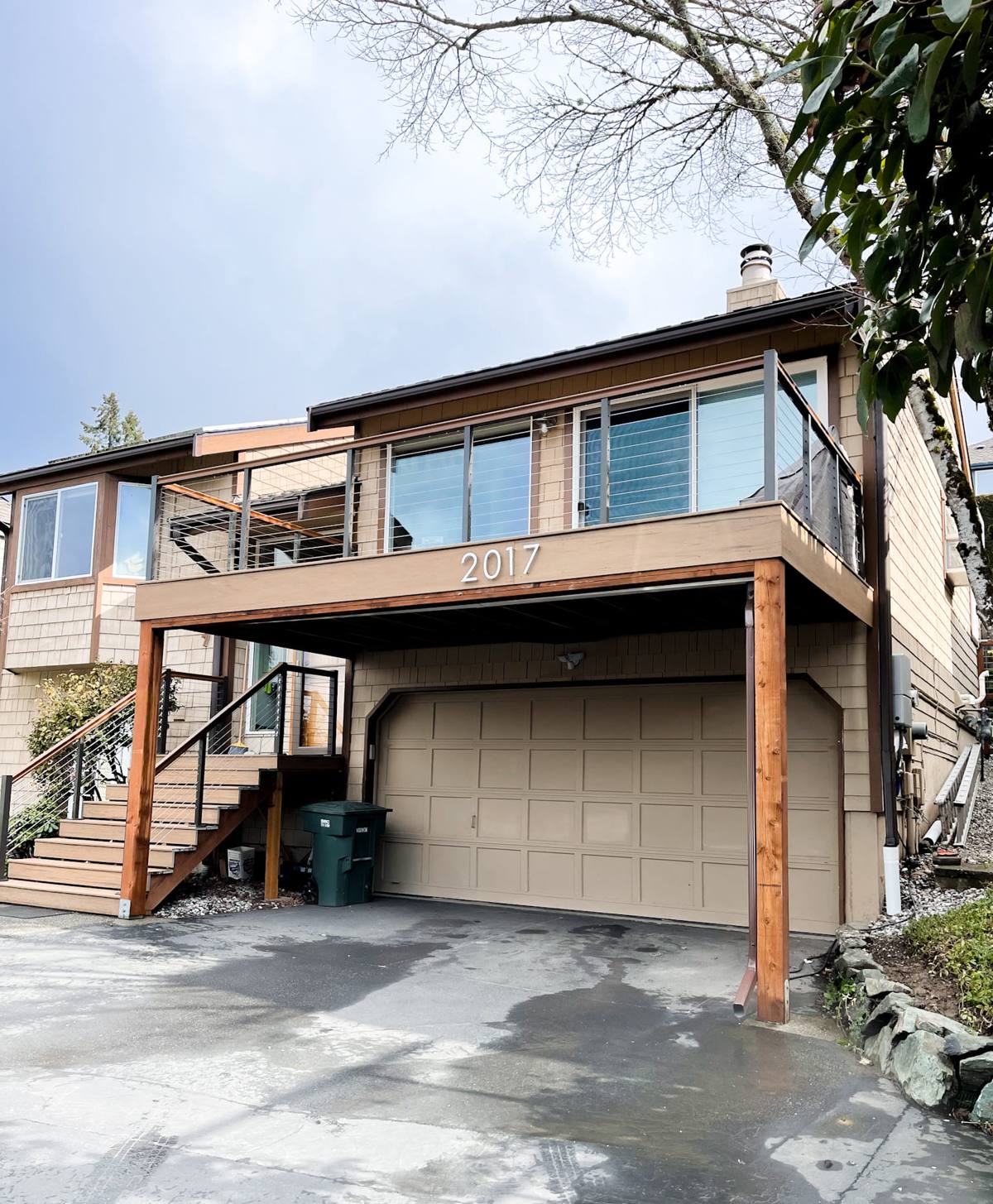
Why Composite Makes Sense for This Neighborhood
Composite decking is a mix of wood fiber and recycled plastic, capped (on better products) with a protective polymer shell. For a lake-adjacent, shaded, moss-prone lot like most of what we see in Sudden Valley, that combination solves several problems at once:
- It doesn't absorb water the way solid wood does, so it's far less prone to the swelling, cupping, and rot that shaded, damp decks develop over a few seasons.
- The capped surface resists moss and algae staining much better than wood, and what does grow on it washes off instead of soaking in.
- It doesn't need annual staining or sealing — which matters on a shaded deck where a fresh coat of stain never really gets the dry-time it needs before the next rain rolls through.
- Color runs all the way through or is capped consistently, so scratches and wear don't expose bare, unfinished material the way they can on painted or stained wood.
That said, composite isn't a "set it and forget it" material, and it isn't immune to the conditions here. It still needs the right substructure, the right fastening, and real attention to drainage and airflow underneath — especially on lots with heavy tree cover, where a deck can stay damp for days after a storm even when the sun's technically out.
What Composite Doesn't Fix on Its Own
We've been called out to look at composite decks in this area that were failing early — not because the decking itself was bad, but because the framing underneath wasn't protected, the fasteners were the wrong grade, or the boards were laid tight against a wall with no airflow. Composite decking is only as good as what's underneath it and how it's installed. That's the part that actually determines whether a deck lasts 10 years or 25.
What a Correct Installation Looks Like Out Here
Framing and Substructure
Given the moisture load in Sudden Valley, we treat the substructure as seriously as the decking itself. That means pressure-treated or naturally durable framing lumber rated for ground contact where it's close to grade, proper flashing at any ledger board connection to the house, and joist tape over the tops of joists so fasteners don't create a path for water into the wood. Skipping joist tape is one of the most common shortcuts we see, and it's usually the first thing that fails on an older deck.
Drainage and Airflow
Under-deck airflow matters more here than in drier parts of the state. Shaded lots near the lake hold humidity longer, and a deck built low to the ground without ventilation gaps traps that moisture against the framing. We build in clearance, avoid enclosing the underside without vents, and grade the ground below to shed water away from the structure instead of pooling under it.
Fasteners and Hardware
Salt air and constant dampness are hard on hardware. We use stainless steel or coated fasteners rated for this kind of exposure, along with hidden fastener clip systems on most composite lines, which also give a cleaner surface with fewer exposed screw heads for moisture and grime to collect around.
Board Layout and Ventilation Gaps
Composite boards expand and contract with temperature more than people expect, and they need proper gapping at butt joints and against any wall or house connection. Too tight, and boards can buckle; too loose, and you get an unfinished look and debris collection. We follow manufacturer spacing specs adjusted for our actual seasonal temperature swings, not a generic number.
The Moss and Algae Question
Moss season around Sudden Valley isn't a minor annoyance — it's close to year-round on shaded decks near mature trees. Composite resists staining far better than wood, but no deck surface is moss-proof if it never gets sun or airflow. A few things make a real difference:
- Choosing a board texture and color that shows less surface grime between cleanings (very dark, matte finishes can show dust and pollen more than mid-tone woodgrain finishes).
- Keeping nearby vegetation trimmed back so the deck gets what sun and airflow the site allows.
- Routine rinsing and an occasional gentle cleaning with a soft-bristle brush and a composite-safe cleaner — pressure washing on the wrong setting can damage the cap layer, so we're specific with clients about what not to do here.
- Making sure drainage grooves on grooved-edge boards aren't installed backward or clogged, since trapped debris in those channels is where a lot of localized moss growth starts.
Comparing Decking Options for a Sudden Valley Property
| Material | Moisture/Moss Resistance | Maintenance | Typical Lifespan Here |
|---|---|---|---|
| Pressure-treated wood | Fair — absorbs water, needs regular sealing to hold up in shade | Annual cleaning, staining/sealing every 1-2 years | 10-15 years with upkeep |
| Cedar | Good natural rot resistance, but still absorbs moisture | Regular oiling/sealing, more if shaded | 15-20 years with upkeep |
| Capped composite | Very good — resists staining, doesn't absorb water | Occasional rinsing/cleaning, no staining | 25-30+ years |
| Uncapped composite | Moderate — better than wood, but surface can absorb some moisture/staining over time | More frequent cleaning than capped product | 15-20 years |
We lean toward capped composite for most Sudden Valley jobs specifically because of the moss and moisture load. Uncapped composite has its place on drier, sunnier lots, but on a shaded lakeside property it tends to pick up staining faster than homeowners expect.
Cost Factors Specific to This Area
Every deck quote depends on size, board selection, railing style, and site access — but a few things specific to Sudden Valley properties tend to move the number:
- Slope and access: Many lots here have grade changes or limited equipment access, which affects framing and material staging costs.
- Height above grade: Elevated decks near the lake often need additional railing and structural engineering considerations.
- Existing deck condition: Tear-off and disposal cost more when the old structure has hidden rot from years of trapped moisture — something we check for during the estimate, not after demo starts.
- Tree cover and shade: Doesn't change material cost directly, but it factors into our board and finish recommendations, which can shift the overall budget.
Our Process for a Sudden Valley Deck Project
- On-site assessment: We look at the existing structure (if replacing a deck), grade, drainage, sun exposure, and tree cover before recommending anything.
- Material selection: We walk through board options, colors, and railing systems based on what actually performs well on your specific lot, not just what's popular.
- Written estimate: Clear scope, timeline, and pricing — no surprise change orders for things we could have caught during the walkthrough.
- Demo and framing: Old decking and any compromised framing removed and replaced; new framing treated and flashed properly for this climate.
- Deck installation: Boards, hidden fasteners, railing, and any lighting or trim installed to manufacturer spec, adjusted for local conditions.
- Final walkthrough: We go over cleaning recommendations and what to expect in year one, particularly around moss and seasonal debris.
Why It Matters That We Already Work in Sudden Valley
A contractor who mainly works in drier, more open parts of Whatcom County can still build a technically sound deck — but they may not default to joist tape, hidden ventilation gaps, or moss-resistant board selection unless they're used to seeing decks fail from exactly those gaps. We've handled enough repair calls out here to know which shortcuts don't hold up against this specific combination of lake humidity, shade, and salt air. That local pattern recognition is worth more than a lower bid from a crew unfamiliar with the neighborhood.
A Quick Checklist Before You Hire Anyone for This Job
- Do they inspect and address the existing framing, not just the surface boards?
- Do they use joist tape and appropriate flashing at ledger connections?
- Do they discuss drainage and airflow under the deck, not just on top of it?
- Do they recommend a board finish suited to shade and moss exposure, not just whatever's cheapest?
- Do they give you a written scope that includes fastener type and hardware grade?
Get a Straightforward Estimate
If you're planning a new composite deck or replacing one that's showing its age in Sudden Valley's damp, shaded conditions, we're happy to take a look and give you an honest read on what your property needs. Fill out the form below for a free, no-pressure estimate.