 Bellingham
 Building Decks for Sudden Valley's Particular Conditions
Sudden Valley sits back from Bellingham in the wooded hills above Lake Whatcom, and that setting changes what a deck has to deal with compared to a lot in town. Heavy conifer cover means more shade, more standing moisture, and more organic debris landing on the surface and working into the gaps. Add in Whatcom County's long wet season and the driving rain that comes through off the water, and you've got a climate that's hard on any outdoor structure that wasn't built with drainage and material choice in mind from the start. We've framed and repaired enough decks in this area to know which details actually matter here and which ones are just extra cost.
This page is about deck building specifically for Sudden Valley homes — what the site conditions demand, what a properly built deck looks like under the surface, and how we approach the job from first site visit to final walkthrough.
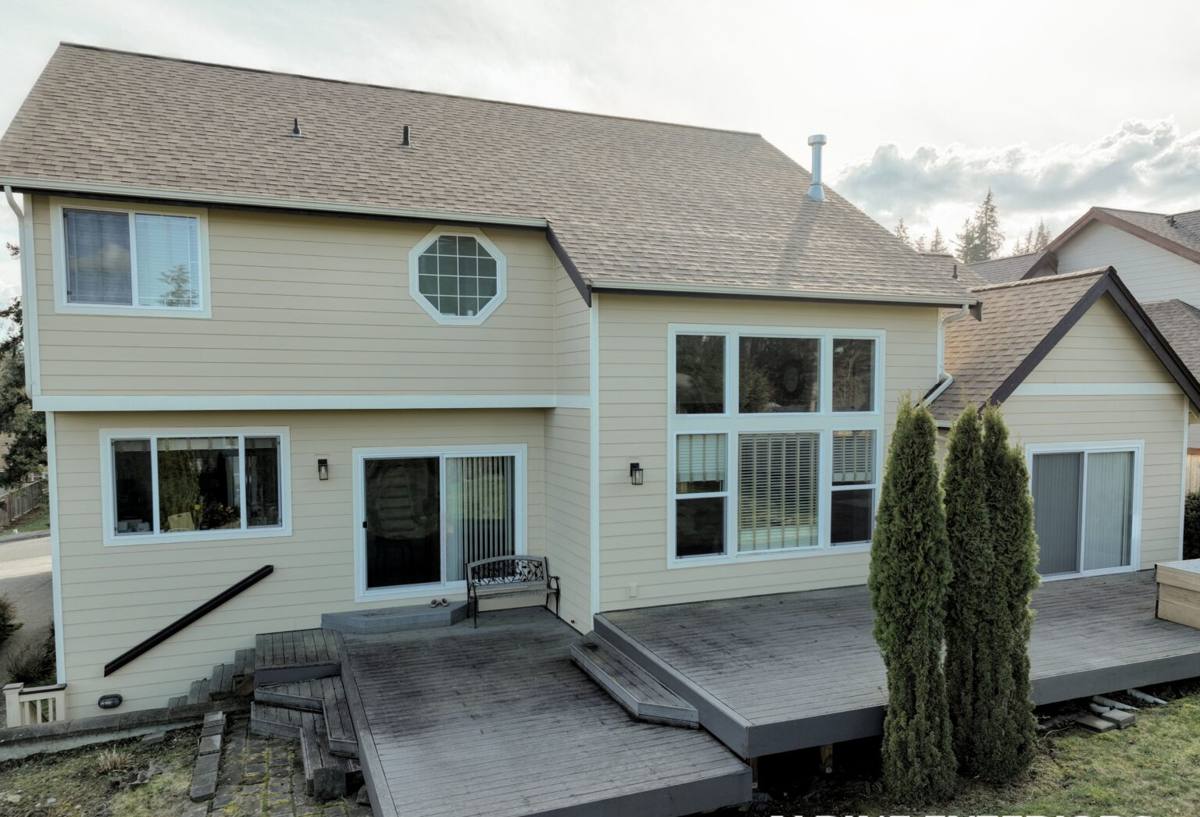
Why Shaded, Lake-Area Lots Are Harder on a Deck
A deck built in full sun in an open subdivision dries out within a few hours after a storm. A deck under mature trees near the lake can stay damp for days, especially through the fall and winter when the sun angle is low and the tree canopy blocks what little direct light there is. That extended dampness is what drives moss growth, accelerates wood rot, and corrodes fasteners faster than the manufacturer's spec sheet usually assumes.
Moss and Slick Surfaces
Moss doesn't just look bad — it holds moisture against the decking material and turns the surface slippery, which is a real safety issue on stairs and landings. Decks with tight board spacing, poor airflow underneath, or a north-facing orientation under tree cover are the ones we see moss up fastest, usually within the first full wet season if the deck wasn't built with drainage and spacing in mind.
Slope and Footing Depth
A lot of properties in this area sit on sloped ground leading down toward the lake. That means footings often need to go deeper or be engineered differently than a flat-lot deck, and post heights aren't uniform across the structure. Getting footing depth and bearing right on a slope isn't optional — it's the difference between a deck that stays level for decades and one that starts sagging on one corner within a few years.
What a Correctly Built Deck Actually Involves
A deck is a simple-looking structure that hides a lot of decisions. Here's what we're actually accounting for on every Sudden Valley project, not just the parts that show.
Ledger Attachment and Flashing
The ledger board — where the deck ties into the house — is the single most common failure point we find on older decks in wet climates. If it isn't flashed correctly to shed water away from the house band joist, moisture works its way in behind the siding and starts rotting structural wood you can't see until it's a real problem. We flash every ledger connection properly and never rely on caulk alone to do that job.
Framing and Fastener Corrosion
Standard interior-rated screws and nails corrode fast in this climate, especially on a shaded, damp lot. We frame with fasteners rated for exterior and ground-contact use, and we match hardware to whatever decking and framing material is actually being installed — pressure-treated lumber, cedar, and composite all have different fastener compatibility requirements.
Drainage Underneath the Deck
Low decks built close to the ground trap moisture underneath if there's no way for water to move through and away. We grade and, where needed, add drainage under low-clearance decks so the space beneath doesn't stay saturated all winter — that's what causes the musty, soft-ground smell homeowners notice under older decks.
Board Spacing and Airflow
Gap spacing between deck boards affects how fast the surface dries after rain. Too tight, and you're building in the exact conditions moss needs. We space boards to manufacturer spec and account for the wood's expansion behavior so the gaps stay consistent through wet and dry seasons instead of closing up entirely.
Decking Material Comparison for This Climate
| Material | Moss/Moisture Resistance | Maintenance | Typical Lifespan Here |
|---|---|---|---|
| Pressure-treated wood | Moderate — needs sealing to perform well | Annual cleaning and re-sealing recommended | 10–15 years with upkeep |
| Cedar | Good natural resistance, but still absorbs moisture | Periodic cleaning, oil or stain every 1–2 years | 15–20 years with upkeep |
| Composite decking | Strong — doesn't absorb water like wood | Occasional washing, no sealing needed | 25+ years, varies by brand warranty |
| PVC decking | Best — fully non-porous | Low; occasional washing | 25+ years, varies by brand warranty |
None of these are the "wrong" choice — it's a trade-off between upfront cost, maintenance you're willing to do, and how much shade and moisture the specific spot on your lot actually gets. We'll walk your site with you and give you a straight opinion based on where the deck sits, not just push whatever has the best margin.
Our Process for a Sudden Valley Deck Build
- Site visit to assess slope, drainage, tree cover, sun exposure, and existing structure (if this is a rebuild)
- Design and material discussion based on how the deck will actually be used and how much shade it sits in
- Permit check and application where required
- Demolition of the old deck, if applicable, with disposal handled
- Footings and framing, sized and placed for the actual slope and soil conditions on your lot
- Ledger flashing and structural tie-in to the house
- Decking, railing, and stair installation
- Final walkthrough covering maintenance expectations for your specific site conditions
Signs an Existing Sudden Valley Deck Needs Attention
- Green or black film on the decking surface, especially in shaded corners or under overhangs
- Soft or spongy spots when you walk across the boards
- Rust streaking around fasteners or visible corrosion on hardware
- Gaps that have closed up tight or boards that have cupped or warped
- Water pooling on the surface instead of draining off after rain
- Musty smell or damp ground directly underneath the deck
- Railing posts that flex or feel loose when pushed
- Visible daylight or gaps at the ledger board where it meets the house
Any one of these is worth a look before it becomes a structural repair instead of routine maintenance.
Permits and Local Rules to Plan Around
New decks and significant rebuilds typically require a permit through Whatcom County, and requirements can vary depending on the deck's height, size, and attachment to the house. Many properties in Sudden Valley also fall under a community association with its own design or approval guidelines, so it's worth checking what applies to your property before work starts. We handle the permit application process as part of the job and won't start structural work without the right sign-offs in place.
What Affects the Cost of a Deck Build Here
| Factor | Why It Matters |
|---|---|
| Size and shape | More square footage and complex layouts (multi-level, angles) mean more framing and labor |
| Slope of the lot | Sloped or lakeside lots often need deeper or engineered footings and variable post heights |
| Decking material | Wood costs less upfront; composite and PVC cost more but need less ongoing maintenance |
| Railing style | Basic wood rail vs. cable, glass, or composite rail systems shift cost significantly |
| Demolition | Removing and disposing of an existing deck adds to the scope of a rebuild |
| Permit requirements | Engineering or additional inspections for taller or attached structures add time and cost |
We give firm, written estimates after seeing the actual site — broad national averages don't mean much once slope, tree cover, and access are factored in.
Maintenance That Actually Matters in This Climate
Whatever material you choose, a few habits make a real difference in a shaded, wet-season climate like this:
- Sweep needles and leaf debris off the surface regularly, especially before the wet season sets in
- Wash the surface at least once a year to remove the moss and algae film before it establishes
- Re-seal or re-stain wood decking on the schedule the product actually calls for, not "when it looks bad"
- Keep gutters and downspouts near the deck clear so runoff isn't dumping directly onto or under the structure
- Trim back overhanging branches where practical to give the deck more light and airflow
Why It Matters to Hire a Crew That Already Works in Sudden Valley
Building a deck that holds up here isn't about a fancier material — it's about accounting for the specific combination of shade, slope, and sustained moisture that this part of Whatcom County deals with every year. A crew that's already built and repaired decks in this neighborhood knows which corners of a lot dry out slowly, how deep footings typically need to go on the slopes around the lake, and what the local permit process actually requires before work starts. That familiarity saves you from paying to learn the same lessons on your own property.
If you're planning a new deck or dealing with an older one that's showing its age, we're happy to come take a look and give you a straightforward, no-pressure estimate. Use the form below to get started.