 Bellingham
 Windows Built for Life Around Lake Whatcom
Sudden Valley sits in one of the more demanding microclimates in Whatcom County. The lake keeps humidity high year-round, the surrounding tree cover means most homes get long stretches of shade and dampness even when the rest of Bellingham is drying out, and the driving rain that rolls in off the water finds every weak seal a window has. Add in a moss season that can stretch from October through May, and it's easy to see why windows here age differently than windows on a dry, open lot in town.
We install and replace windows for homeowners throughout Sudden Valley and the rest of Whatcom County, and we treat this neighborhood as its own case, not a smaller version of a Bellingham job. The shade, the moisture load, and the way water moves across a lakeside roofline all change what "correct installation" actually means here.
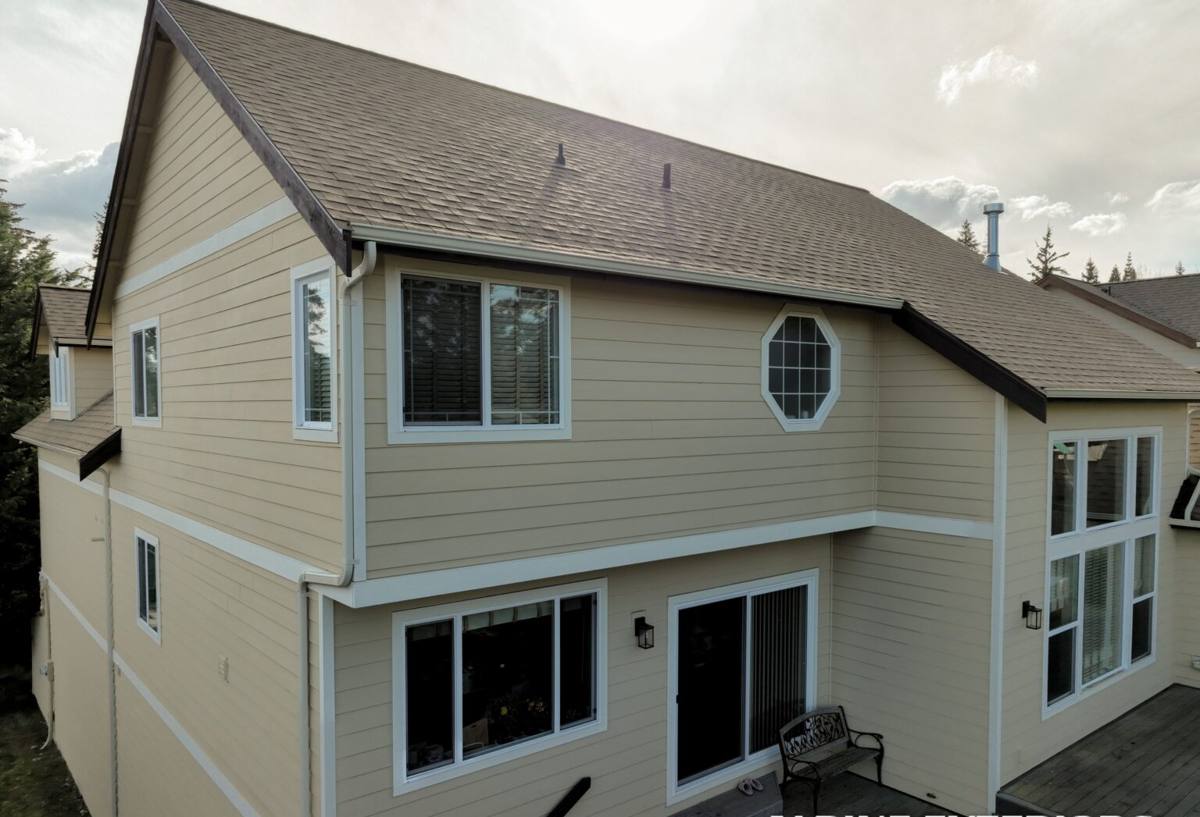
What Sudden Valley's Climate Does to Windows Over Time
Constant Moisture, Not Just Rain
A lot of coastal Whatcom County homes dry out between storms. Homes tucked into the trees around Sudden Valley often don't get that break. Morning dew, lake humidity, and shade from mature conifers keep window frames and sills damp longer than they would be on an open lot. Over years, that constant low-grade moisture is harder on wood-framed and poorly sealed vinyl windows than an occasional hard rain.
Driving Rain and Wind Off the Lake
Storms that track across the lake pick up speed and push rain sideways into west- and south-facing walls. Windows that rely only on caulking, rather than a proper flashing and drainage plane, will eventually let water track behind the frame. You usually don't see this until there's staining on interior trim or soft drywall below the sill — by then the water's been getting in for a while.
A Long Moss and Algae Season
Shade plus moisture equals moss, and it doesn't stop at the roofline. Moss and green algae build up on window sills, frame tracks, and exterior trim, holding moisture against the surface and slowly breaking down caulking, paint, and vinyl finishes. Homes with heavy tree cover need window materials and details that shed water and resist organic growth, not just look good on install day.
Temperature Swings and Condensation
Whatcom County winters aren't extreme, but the combination of cool nights, high humidity, and warm interior air creates real condensation potential on older or single-pane windows. In a shaded, damp neighborhood like Sudden Valley, that condensation has fewer chances to evaporate off, which means more time for it to work into frames and sills.
What "Energy-Efficient" Actually Means for This Neighborhood
Energy efficiency isn't just a U-factor number on a label. For Sudden Valley homes specifically, it comes down to three things working together:
- Air sealing that survives moisture cycling — seals that stay flexible and tight through repeated wet-dry-humid cycles, not just on a dry install day
- Glass and frame performance suited to a shaded, cool site — the right glass package reduces heat loss without over-investing in solar control you don't need under tree cover
- Drainage that assumes water will get behind the frame — because on this site, eventually it will, and the detail that matters is where it goes next
A window that's efficient on paper but poorly flashed will lose that efficiency fast once water gets into the wall assembly and the frame starts to move or rot. We prioritize the installation detail as much as the product spec, because in this climate the install is what determines whether the efficiency numbers hold up.
Our Process for Sudden Valley Window Jobs
1. On-Site Assessment
We look at sun and shade exposure on each elevation, existing signs of moisture (staining, soft trim, failed caulking), moss and algae buildup around current window frames, and the condition of the wall assembly behind the window. This tells us whether we're doing a straightforward replacement or need to address rot or flashing issues first.
2. Product Selection Based on Exposure, Not a Standard Package
A shaded, north-facing window on a lake-adjacent lot doesn't need the same glass package as a sun-exposed south wall. We walk through options by elevation rather than defaulting to one spec for the whole house, so you're not overpaying for performance you don't need in the shade, or underspeccing where the sun does hit.
3. Removal and Wall Inspection
Old windows come out carefully so we can inspect the rough opening, sheathing, and existing flashing. In a damp, wooded neighborhood, this step matters more than in drier parts of the county — hidden moisture damage behind an old window is common and needs to be dealt with before a new one goes in, not after.
4. Flashing and Drainage Detail
This is the step that determines whether a window performs for 20 years or leaks in five. We integrate flashing with the existing water-resistive barrier, install proper sill pans so any water that does get past the frame has somewhere to go, and make sure nothing traps moisture against wood framing.
5. Air Sealing and Finish
Interior and exterior sealing, insulation at the rough opening, and trim work finished to match the home. We check operation, seal integrity, and drainage before we consider the job done.
Choosing the Right Window Type for a Shaded, Damp Site
| Window Type | How It Performs in Sudden Valley Conditions | Our Take |
|---|---|---|
| Vinyl, fusion-welded frame | Handles moisture well, low maintenance, resists the moss and algae buildup common under tree cover | Our standard recommendation for most Sudden Valley homes — durability matters more here than in drier neighborhoods |
| Fiberglass | Very stable in temperature and humidity swings, strong long-term performance in shaded, damp conditions | Worth the added cost on homes with heavy sun/shade contrast or larger openings |
| Wood or wood-clad | Attractive but requires more upkeep to resist moisture and moss in a consistently damp, shaded setting | We'll install it if that's the look you want, but we're upfront that the maintenance schedule needs to be tighter here than on a drier lot |
| Aluminum | Conducts heat and cold readily, prone to condensation in our humid, cool climate | Generally not what we recommend for energy efficiency goals in this neighborhood |
Signs Your Sudden Valley Home Needs New Windows
- Visible moss, algae, or green staining building up on sills or frame tracks
- Condensation forming between panes, or persistent fogging that doesn't clear
- Drafts you can feel near the frame, especially during wind off the lake
- Soft or discolored trim and drywall below or around a window
- Windows that are difficult to open, close, or lock — a sign the frame has shifted or swollen
- Noticeably higher heating costs compared to similar homes without tree cover or shade
- Single-pane or original builder-grade windows original to an older home
Why Local Installation Experience Matters Here
Sudden Valley's mix of shade, lake humidity, and moss exposure isn't something every window crew accounts for. A crew that mostly works dry, open lots in town may spec and install correctly for that environment and still leave a Sudden Valley home vulnerable to the moisture patterns specific to this site. We work throughout Whatcom County, and we adjust flashing details, product selection, and sealing methods based on what a given neighborhood's climate actually does to a wall assembly over time — not a one-size-fits-all install.
We also don't push a single product line as the answer to every job. Different manufacturers make trade-offs in frame material, seal design, and warranty structure, and the right call depends on your home's exposure, budget, and how much upkeep you want to take on. We'll walk through those trade-offs honestly rather than defaulting to whatever's easiest to install.
What to Expect for Cost and Timeline
Window replacement costs vary by size, frame material, glass package, and how much of the surrounding trim or wall needs repair from prior moisture damage. Straightforward replacements in an existing, sound opening are quicker and less costly than jobs where we find rot or flashing failures that need to be corrected first — which, given this neighborhood's moisture exposure, isn't unusual on older homes. We'll give you a clear breakdown of what's driving the cost on your specific home before any work starts, not a generic per-window estimate that doesn't account for what we actually find behind the old frame.
If you're seeing moss buildup, drafts, or condensation on your windows, or you're just planning ahead for a home in Sudden Valley, we're happy to take a look and give you a straightforward, no-pressure estimate. Use the form below to get started.