 Bellingham
 Why Sudden Valley's Setting Is Hard on Siding
Sudden Valley sits in one of the more demanding microclimates in Whatcom County. It's not just the region's marine climate — the salt-tinged air, driving rain, and long moss season that affect every home from Bellingham Bay inland — it's what the lake and the trees add on top of that. Lots here tend to be heavily wooded and often shaded for large parts of the day, which means siding stays damp longer after every storm than it would on an open, sun-exposed lot. Add the humidity that settles into the Lake Whatcom basin and the hillside terrain that channels wind-driven rain into corners and wall sections that don't get it elsewhere, and you have conditions that punish any siding product with a weak moisture strategy.
What This Means for a Siding Product
Wood-based and wood-adjacent siding products (cedar, primed spruce, OSB-based composites like LP SmartSide) all depend on maintaining an intact paint or sealant layer to keep moisture out. In a shaded, slow-drying environment like Sudden Valley, that layer gets tested constantly — and once it fails at a seam, a fastener head, or a cut edge, the substrate underneath starts absorbing water. That's the core reason we don't install those products here. It's not that they fail immediately; it's that this specific climate accelerates the failure modes they're already prone to.
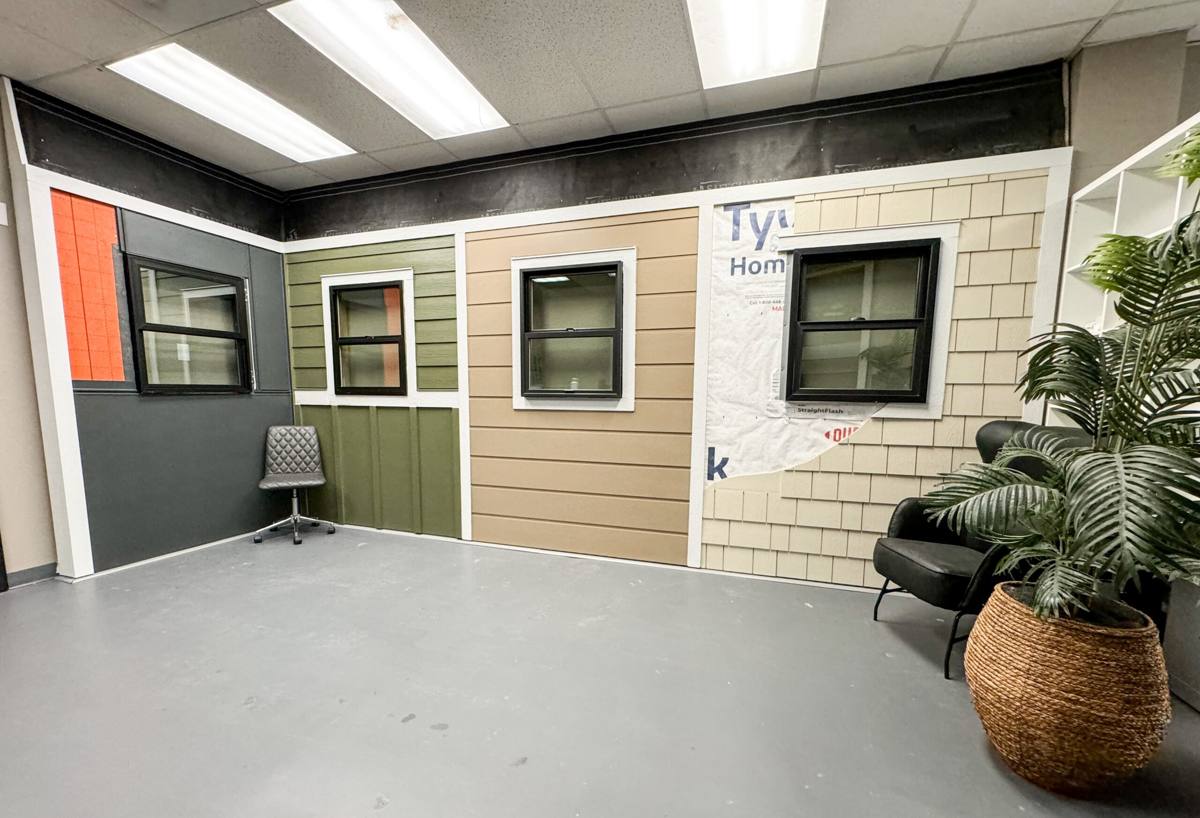
Why We Install Only James Hardie Fiber Cement
James Hardie siding is fiber cement — a mix of cement, sand, and cellulose fiber that doesn't absorb and swell the way wood-based products do, and won't support the rot or fungal growth that shaded, damp siding is prone to. It's also non-combustible, which matters in a heavily treed community where wildfire exposure is a real consideration for insurers and homeowners alike. Hardie engineers its lap siding, panels, and trim specifically for regional climate zones (its HZ5 and HZ10 product lines), and its ColorPlus factory-applied finish is baked on and warrantied against fading and cracking in a way that field-applied paint on wood siding simply isn't.
We standardized on Hardie because it's the one product in this category we can install on a shaded, moisture-heavy Sudden Valley lot and stand behind for the long term. We're not paid more to say that — we just don't want to be back in five years re-caulking swollen seams on a product we know doesn't hold up to this climate.
What a Correct James Hardie Installation Involves
Fiber cement siding is only as good as the installation behind it. Hardie's own installation instructions are specific for a reason — this is a product that performs exactly as well as it's installed, no better.
Drainage Plane and Rainscreen
On a lot that doesn't dry out quickly, the water-resistive barrier and the gap behind the siding matter as much as the siding itself. A proper rainscreen gap lets bulk water that gets behind the cladding drain and lets trapped moisture evaporate instead of sitting against the sheathing. Skipping or shortcutting this step is one of the most common ways fiber cement siding fails early — and it's invisible once the job is closed up, which is exactly why it needs to be done right the first time.
Fastening and Flashing
Hardie specifies fastener type, placement, and penetration depth for a reason — over- or under-driven nails compromise the board's structural attachment and can create paths for water intrusion. Flashing at windows, doors, decks, and roof-to-wall intersections needs to shed water outward at every layer, not just look correct from the ground. On hillside lots with wind-driven rain, these details around penetrations are where problems start if they're rushed.
Joints, Trim, and Caulk
Butt joints, trim-to-siding transitions, and caulk lines are the highest-maintenance parts of any siding job, and they're where shaded, slow-drying walls show wear first. We treat these as installation details to get right the first time, not touch-up items to revisit later.
Choosing the Right Hardie Products for Sudden Valley Lots
James Hardie makes several product lines, and the right choice depends on the home's style, exposure, and how much of the wall sits in shade versus open sun.
| Product | Best Use | Why It Fits Sudden Valley |
|---|---|---|
| HardiePlank lap siding | Traditional horizontal siding, most home styles | Widest color and texture range; performs well on both shaded and exposed elevations |
| HardiePanel vertical siding | Modern or mixed-material facades, accent walls | Clean lines that pair well with the wood-and-stone look common around the lake |
| HardieShingle siding | Accent gables, dormers, transitional homes | Adds texture without the maintenance burden of real cedar shingle |
| HardieTrim boards | Corners, window/door casing, fascia | Won't cup or split the way wood trim does under constant damp-shade cycling |
We also factor in which Hardie climate engineering (HZ5 versus HZ10) is specified for this part of Washington, since that affects the board's moisture and freeze-cycle performance — this isn't a detail homeowners need to track themselves, but it's one we confirm on every order.
What Drives Cost on a Sudden Valley Siding Project
Every home is different, but a few factors consistently move the scope and cost of a siding job in this specific community more than they would on a flat, open lot elsewhere in Bellingham.
| Factor | Why It Matters Here | Cost Impact |
|---|---|---|
| Site access and terrain | Sloped, wooded lots often need staging, extended ladder work, or careful equipment routing | Medium–High |
| Tree proximity | Branch clearance and protection during tear-off and install take extra time and care | Medium |
| Existing siding removal | Full tear-off versus overlay affects labor, disposal, and what's found underneath | Medium–High |
| Trim and architectural detail | Multiple gables, dormers, or transitions add cutting and flashing time | Medium |
| Moisture or rot findings | Shaded walls sometimes reveal sheathing damage once old siding comes off | Variable |
We walk every one of these through with the homeowner before work starts, so there are no surprises mid-project — and we flag anything we find behind the old siding before we cover it back up.
Our Process, Start to Finish
- On-site walkthrough — we assess sun/shade exposure, tree cover, terrain, and existing siding condition specific to your lot.
- Written estimate — product selection, scope, and cost factors laid out clearly, no pressure to decide on the spot.
- Tear-off and inspection — old siding comes off, sheathing and framing get checked before anything new goes up.
- Weather barrier and rainscreen installation — the part you won't see again once it's closed in, done to spec.
- Hardie siding, trim, and flashing installation — fastened, flashed, and finished per Hardie's requirements.
- Final walkthrough — we go over the finished work with you before calling the job done.
Maintenance: What to Expect Living on the Lake
One of the real advantages of switching to James Hardie in a climate like this is how little ongoing maintenance it asks for compared to wood-based siding. That said, no siding is entirely maintenance-free, especially on a shaded, tree-surrounded lot.
- Rinse siding periodically to clear pollen, moss spores, and organic debris before they take hold, especially on north-facing or heavily shaded walls
- Keep gutters clear so overflow doesn't run down the wall face and stay wet longer than it should
- Trim back branches and vegetation touching the siding to improve airflow and drying time
- Inspect caulk lines at trim and penetrations every year or two and recaulk if they've cracked or pulled away
- Address any impact damage or chipped ColorPlus finish promptly rather than letting it sit exposed
None of this compares to the sanding, scraping, and repainting cycle wood siding demands in a damp, shaded environment — it's a fraction of the effort for a fraction of the risk.
Why Local Experience in Sudden Valley Matters
A crew that hasn't worked this community before will underestimate the access challenges, misjudge how much shade and moisture a given wall sees through the day, or treat every lot like it's on flat, open ground. We've worked on homes throughout the Bellingham area and understand how the terrain, tree cover, and lake-basin humidity around Sudden Valley change what "correct installation" actually requires on a given wall. That local familiarity shows up in small decisions — how we sequence work around trees, where we pay extra attention to flashing, which walls need a closer look at the old sheathing — that a crew unfamiliar with the area might miss.
Get a Free, No-Pressure Estimate
If your Sudden Valley home's siding is showing its age, or you're planning ahead before it becomes a bigger problem, we're happy to take a look and walk you through what we see — no obligation, no pressure. Use the form below to request a free estimate.