 Bellingham
 Why Sudden Valley Roofs Age Differently
Sudden Valley sits among heavy tree cover on hilly terrain near Lake Whatcom, and that setting changes how a roof lives out its lifespan compared to a roof on an open lot closer to town. Shade from tall conifers keeps shingles damp longer after every rain, which is exactly the condition moss and algae need to take hold. Add in the broader Bellingham climate — salt-tinged air moving in off the bay, long stretches of driving rain through fall and winter, and a moss season that can run most of the year in shaded spots — and you get roofs that wear unevenly. North-facing slopes and areas under a tree canopy often need attention years before the rest of the roof shows its age.
None of this means Sudden Valley homes need exotic materials or gimmicks. It means the replacement has to be planned around moisture: how water sheds, how the roof breathes, and how much moss and organic debris it's realistically going to collect between cleanings. A roof installed without that in mind will look fine for a season or two and then start showing problems a roof on a sunnier, more exposed lot wouldn't see for a decade.
Signs Your Roof Needs Replacement, Not Just Repair
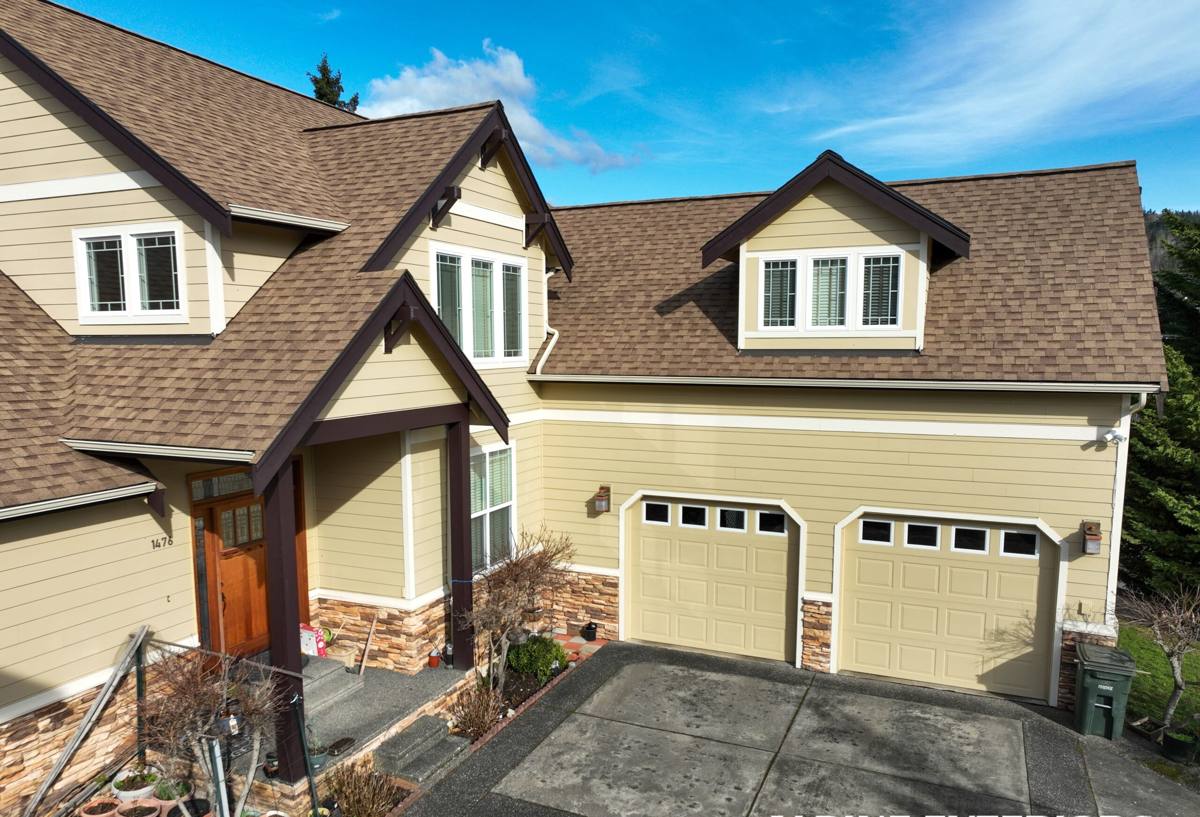
Repair makes sense when the problem is isolated — a cracked flashing detail, a handful of lifted shingles after a windstorm. Replacement becomes the honest answer when the roofing system itself is failing, not just a piece of it. On shaded, moss-prone lots like many in Sudden Valley, that line gets crossed faster than homeowners expect, because trapped moisture works on the roof from underneath as much as from above.
- Granule loss heavy enough that you can see bare, shiny patches on the shingle surface
- Moss or algae growth that comes back within months of cleaning, especially on north-facing or shaded slopes
- Shingles that are curling, cupping, or cracking rather than lying flat
- Soft or spongy decking felt underfoot, or sagging visible from the ground
- Water stains, discoloration, or musty smell in the attic, especially near valleys or eaves
- A roof approaching or past the manufacturer's expected service life for its material and exposure
- Recurring leaks in different spots each season rather than one consistent trouble area
If you're only seeing one or two of these and the roof is otherwise mid-life, a repair or a partial section replacement may be the right call. If several of these show up together, patching tends to become a cycle of chasing new leaks every wet season rather than solving the underlying problem.
What a Correct Roof Replacement Involves
Full Tear-Off, Not a Layover
On a shaded, damp lot, installing new shingles over an old layer traps moisture that's already working its way into the deck and hides rot that needs to be caught now. A proper replacement means stripping the roof to the decking, which also lets us actually see the condition of the structure underneath instead of guessing.
Deck Inspection and Repair
Once the old roofing is off, we check the sheathing for soft spots, delamination, or rot — common where moss has been holding moisture against the roof for years. Any damaged decking gets replaced before anything new goes down. Skipping this step is one of the most common ways a "new roof" ends up leaking within a couple of years.
Underlayment and Ice-and-Water Protection
Given how much rain this area sees, we use a synthetic underlayment across the field of the roof and self-adhering ice-and-water membrane at the eaves, valleys, and around penetrations — the spots where water concentrates and where a standard felt underlayment is most likely to fail over time.
Flashing and Penetration Detailing
Flashing around chimneys, skylights, vent stacks, and roof-to-wall transitions is where most leaks actually start, not in the open field of shingles. We replace flashing rather than reuse it, and we take extra care at any point where the roof meets a wall or a tree limb overhangs closely enough to funnel water and debris into a joint.
Ventilation
A roof that can't breathe traps heat and moisture in the attic, which shortens shingle life from underneath and can encourage rot regardless of how good the shingles themselves are. We check intake at the soffits and exhaust at the ridge and correct any imbalance as part of the replacement, not as an afterthought.
Choosing a Roofing Material for a Wooded, Wet Lot
There's no single "best" roofing material — the right choice depends on how much shade and tree debris your specific roof deals with, your budget, and how much upkeep you want to take on. Here's how the common options compare for a lot like the ones common in Sudden Valley.
| Material | Moss & algae resistance | Maintenance | Typical lifespan | Notes for shaded lots |
|---|---|---|---|---|
| Standard architectural asphalt shingle | Moderate | Periodic cleaning recommended | 20–30 years | Cost-effective; performs best when paired with good airflow and occasional debris removal |
| Algae-resistant (AR) asphalt shingle | Higher | Lower, but not maintenance-free | 25–30 years | Worth the upgrade on heavily shaded slopes; resistance fades gradually over the roof's life |
| Standing seam metal | High | Low | 40–50+ years | Sheds moss and debris well due to smooth, slick surface and steep water flow |
| Synthetic/composite shingle | Moderate to high | Moderate | 30–50 years | Good option when appearance matters and budget sits between asphalt and metal |
For most homes we see in this area, an algae-resistant architectural shingle is the practical middle ground — noticeably better moss resistance than standard shingles without the higher upfront cost of metal. Metal earns its keep on steep, heavily shaded roofs where owners want to minimize cleaning long-term. We'll walk the roof with you and give you a straight recommendation based on your specific tree cover and slope, not a one-size answer.
Ventilation and Moisture Management Under Tree Cover
A roof surrounded by trees deals with two moisture problems at once: rain that takes longer to dry off the surface, and attic humidity that has fewer chances to escape when the whole property sits in shade. Getting ventilation right matters more here than it would on an open, sun-exposed lot.
We size intake and exhaust venting to work together — soffit vents pulling in fresh air, ridge venting letting warm, moist air out — rather than relying on a mismatched combination of old box vents and undersized soffit openings, which is a common issue we find on older roofs during tear-off. Balanced ventilation reduces the moisture buildup that feeds rot in the decking and helps the underside of the roofing material dry out between rain events instead of staying damp continuously.
Our Roof Replacement Process
- On-site evaluation: We walk the roof and attic, check for soft decking, ventilation issues, and problem areas specific to your lot's tree cover and slope.
- Written estimate: A clear scope and price — no vague allowances, no pressure to decide on the spot.
- Material selection: We go over the trade-offs in plain terms so you're choosing based on your roof and budget, not a sales pitch.
- Scheduling around the weather: We plan tear-off for a stretch of dry weather where possible and keep the roof protected if conditions change mid-job.
- Tear-off and deck inspection: Old roofing comes off, decking is inspected and repaired as needed.
- Underlayment, flashing, and material installation: Installed to manufacturer specification, with extra attention at valleys, penetrations, and wall transitions.
- Ventilation correction: Intake and exhaust venting balanced as part of the job, not billed as a surprise add-on later.
- Final walkthrough and cleanup: We check the finished roof with you and clear the site of debris, including nails and old material.
Timing, Access, and Site Considerations
Wooded, hilly lots like the ones common in Sudden Valley take more planning to work on than a flat, open roof. Tree limbs close to the roofline often need trimming back before work starts, both for the crew's safety and to keep debris from immediately collecting on the new roof. Staging equipment, a dumpster, and material delivery can be tighter on narrower or private community roads, so we plan logistics before the crew shows up rather than figuring it out on-site. If your property is part of a community association with its own access rules or contractor requirements, let us know early — we'll work within whatever process is in place rather than treating it as an afterthought.
Timing also matters more here than on a drier site. We aim to schedule tear-off during a reliable dry window given how much of the year sees rain in this region, and we keep the roof protected with underlayment or covering if weather turns mid-project.
Why a Crew That Knows Sudden Valley Matters
A roofer who mostly works flat, sun-exposed lots in town will approach a shaded, tree-lined roof the same way they approach every other job — and that's how you end up with a roof that looks right on installation day but starts showing moss and soft spots within a few years. Knowing which slopes on a wooded lot need extra ventilation, which valleys collect the most debris, and how to stage a job safely around mature trees and tighter community roads isn't something you pick up from a single job. It comes from doing this work repeatedly in this specific kind of setting.
We're a Bellingham-based crew that works throughout Whatcom County, including neighborhoods like Sudden Valley, and we bring that site-specific experience to every estimate — not generic advice that ignores what your particular lot actually deals with.
If your roof is showing its age or you just want a straight assessment of where it stands, we're happy to take a look. Reach out for a free, no-pressure estimate using the form below.