 Bellingham
 Siding Installation Built for Sudden Valley's Conditions
Sudden Valley sits in a wooded, lake-adjacent pocket of Whatcom County southeast of Bellingham, and that setting creates a different set of demands on exterior siding than you'd find on a more open, sun-exposed lot in town. Tree canopy holds moisture against the house longer after rain. Proximity to Lake Whatcom keeps humidity elevated through the shoulder seasons. And the same shade that makes the neighborhood pleasant in July is exactly what keeps north-facing walls damp well into spring. Siding that isn't engineered for that combination of shade, moisture, and organic growth pressure will show it early — usually as moss staining, soft trim, or paint failure long before the rest of the house looks tired.
We install James Hardie fiber cement siding exclusively, and we do it because it's one of the few products built to handle exactly this kind of environment without turning into a maintenance project. This page covers what Sudden Valley homes specifically need from a siding installation, what a correct job looks like, and how our process works from first look to final walk-through.
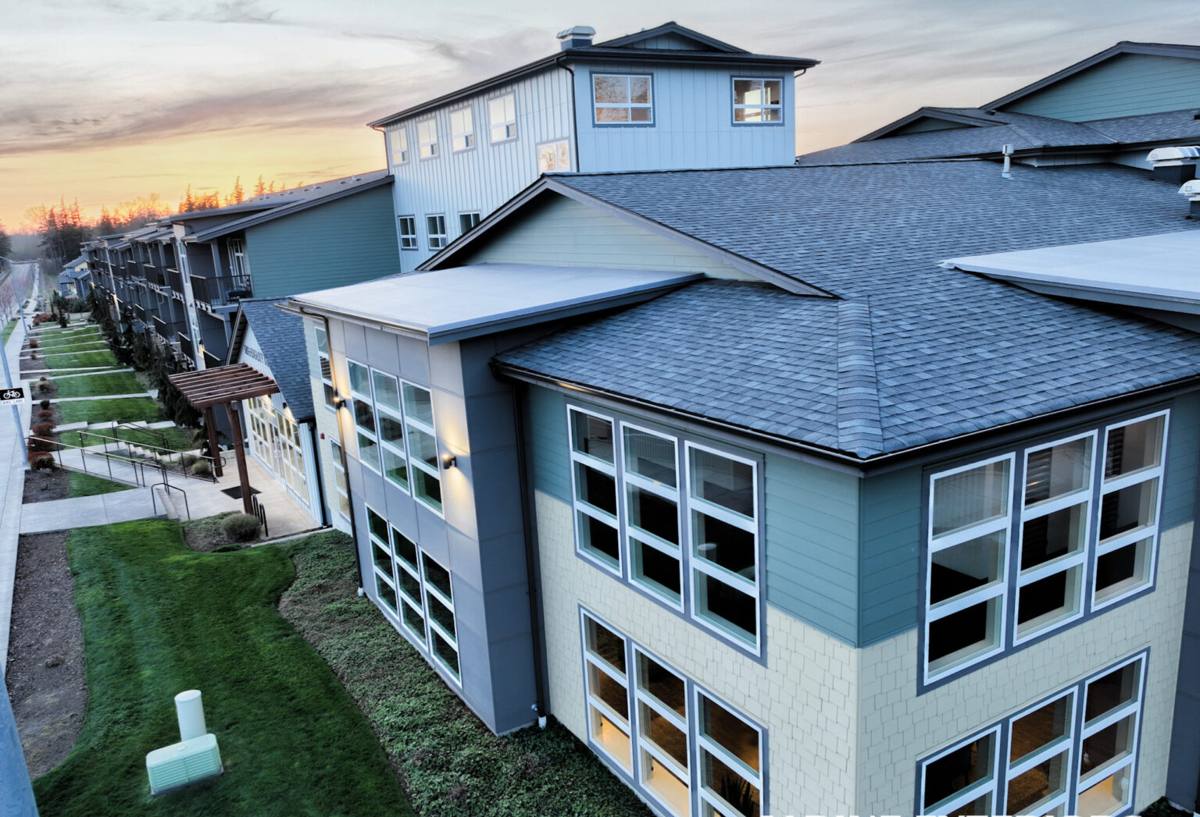
What the Local Climate Actually Does to Siding
Shade and Moss Season
Whatcom County's moss season isn't a few weeks — it's most of the year. On a wooded lot like the ones common in Sudden Valley, north- and east-facing walls can stay damp for days after a storm because direct sun and wind never fully reach them. Wood-based sidings absorb that moisture, swell, and give moss and algae a surface to grip. Once moss establishes at a seam or panel edge, it holds water against the substrate continuously, which is where rot usually starts — not from one big storm, but from months of low-grade dampness nobody's tracking.
Salt Air and Driving Rain
Even set back from open water, this part of the county gets salt-tinged air on top of the region's driving, wind-blown rain. That combination is hard on fasteners, caulking, and any siding product with a finish that isn't factory-cured. Paint applied on site starts breaking down faster under those conditions, and once the finish goes, the substrate underneath is exposed to exactly the moisture cycle described above.
Why This Matters for Installation, Not Just Material
A good product installed poorly will fail in this climate just as fast as a poor product. Flashing details, panel gaps, caulk joints, and fastener placement all matter more here than they would on a dry, open, south-facing lot elsewhere in the county. This is a climate that punishes shortcuts.
Why We Only Install James Hardie
James Hardie fiber cement is non-combustible, dimensionally stable, and finished at the factory with ColorPlus technology rather than painted on site after installation. That factory finish is baked and cured under controlled conditions, which gives it far better resistance to fading and peeling than field-applied paint has to work with — a real advantage in a climate that's damp more often than it's dry. Hardie's HZ5 product line is engineered specifically for climates with extended moisture exposure, which describes Sudden Valley's tree-shaded, lake-humid conditions well.
Fiber cement doesn't absorb water the way wood-based products do, so it doesn't swell, cup, or give moss the same organic surface to colonize. It also carries a strong transferable warranty backed by a manufacturer with decades of track record in Pacific Northwest conditions specifically. We don't install vinyl, LP SmartSide, cedar, primed spruce, or other fiber cement brands — not because those products have no merit, but because we've standardized on the one system that holds up here with the least long-term maintenance burden, and we'd rather install one product exceptionally well than several products adequately.
How Hardie Compares to Alternatives Homeowners Ask About
| Factor | James Hardie Fiber Cement | Cedar / Primed Wood | Vinyl |
|---|---|---|---|
| Moisture absorption | Very low | High — swells and checks | None, but traps moisture behind it |
| Moss/algae resistance | Strong when maintained | Poor in shaded, damp areas | Moderate; seams collect debris |
| Finish durability | Factory-cured, long interval | Field paint, shorter interval | Color molded in, but fades and chalks |
| Fire resistance | Non-combustible | Combustible | Combustible, can melt/warp |
| Typical repaint/recoat cycle | Long, factory finish dependent | Every few years | Rarely repainted, but not repairable |
What a Correct Installation Involves on a Sudden Valley Lot
Material choice is half the equation. The other half is whether the installation accounts for the specific way water moves across a shaded, sloped, tree-adjacent property. On these lots we pay particular attention to:
- Proper weather-resistive barrier and rainscreen gap so moisture that does reach the wall assembly can drain and dry rather than sit against the sheathing
- Correct flashing at every window, door, and roofline intersection — the majority of moisture intrusion callbacks we see on older homes trace back to flashing, not the siding field itself
- Panel and trim gaps sized to Hardie's specification, not tightened up for looks, so the assembly can handle seasonal movement without trapping water at the joints
- Fastener placement and type matched to Hardie's install guide, since improper fastening is one of the more common warranty-voiding mistakes on fiber cement jobs
- Attention to ground clearance and any spots where landscaping, mulch beds, or low branches sit close to the wall, all of which hold moisture against siding longer
On heavily treed lots we'll also flag areas where overhanging branches or dense shrubs are keeping a wall section perpetually damp — sometimes the best fix for a moss-prone spot is a small landscaping adjustment alongside the new siding, not just the siding itself.
Signs Your Current Siding Is Already Behind
Homeowners in this area usually reach out for one of a few reasons:
- Persistent moss or dark streaking on shaded walls that comes back within a season of cleaning
- Soft or spongy spots near the bottom courses or around window trim
- Visible cupping, warping, or checking on wood-based siding
- Paint that's chalking, peeling, or needing repainting more often than every few years
- Visible gaps or separation at seams and corners after a few winters
Any of these usually means moisture has already been getting behind the surface for a while, even if the front of the house still looks presentable from the street.
Our Process for Sudden Valley Jobs
Assessment
We start with a walk-around that looks at more than just the siding surface — we're checking flashing, trim condition, any soft spots, and how the specific lot's tree cover and sun exposure are affecting different sides of the house differently. A north wall under mature trees and a south wall in more open light often need different attention even on the same house.
Scope and Product Selection
We walk through which Hardie product line and profile fits the home — lap siding, panel systems, or a mix with trim and accent details — along with color options from the ColorPlus palette. We explain what's driving the recommendation rather than just presenting a quote.
Installation
Our crews follow Hardie's installation specification precisely, because that's what keeps the manufacturer warranty valid and what actually determines how the siding performs in this climate over time. That includes the rainscreen, flashing, fastening, and joint details covered above.
Final Walk-Through
We go over the finished work with the homeowner, including any maintenance notes specific to the lot — for example, whether a particular wall section will need occasional cleaning given nearby tree cover.
Maintenance Expectations After Installation
Fiber cement dramatically reduces maintenance compared to wood-based siding, but "low-maintenance" isn't "no-maintenance" in a climate like this. Expect to rinse off moss or organic buildup on shaded walls periodically, keep gutters clear so overflow isn't running down the siding face, and keep an eye on caulk joints at trim and penetrations over the years. None of this compares to the sanding, scraping, and repainting cycle wood siding requires, but a five-minute check once or twice a year keeps a Hardie installation performing the way it's designed to.
Why a Crew That Already Works This Area Matters
A contractor who already works Sudden Valley and the surrounding Bellingham area understands how differently a shaded, tree-covered, lake-adjacent lot behaves compared to an open lot closer to town. That's not something you pick up from a spec sheet — it comes from having installed and later serviced siding on lots with the same tree cover, the same drainage patterns, and the same moss pressure. It also means a shorter distance for warranty follow-ups or questions down the line, rather than waiting on a crew based somewhere else in the county.
If you're weighing a siding replacement or new installation in Sudden Valley, we're happy to take a look and give you a straightforward, no-pressure assessment of what your home actually needs. Use the form below to request a free estimate.