 Bellingham
 Why Sunnyland Roofs Take a Different Kind of Beating
Sunnyland is a quiet, tree-shaded part of Bellingham, and that's exactly what makes roofs here wear out faster than a lot of homeowners expect. Mature tree cover means more shade, more standing needles and debris, and slower drying after every storm. Add in the moisture-heavy air that moves through Whatcom County off Bellingham Bay and the Strait, and you've got a climate that's tough on roofing even when nothing looks obviously wrong from the ground.
Most of the roof damage we find in this neighborhood isn't from one big storm — it's from years of slow, quiet wear: rain that gets pushed sideways under flashing, moss that holds moisture against shingles for months at a time, and metal fasteners that corrode a little faster in salt-tinged coastal air. None of that shows up overnight. It shows up as a small leak three years from now if it isn't caught early.
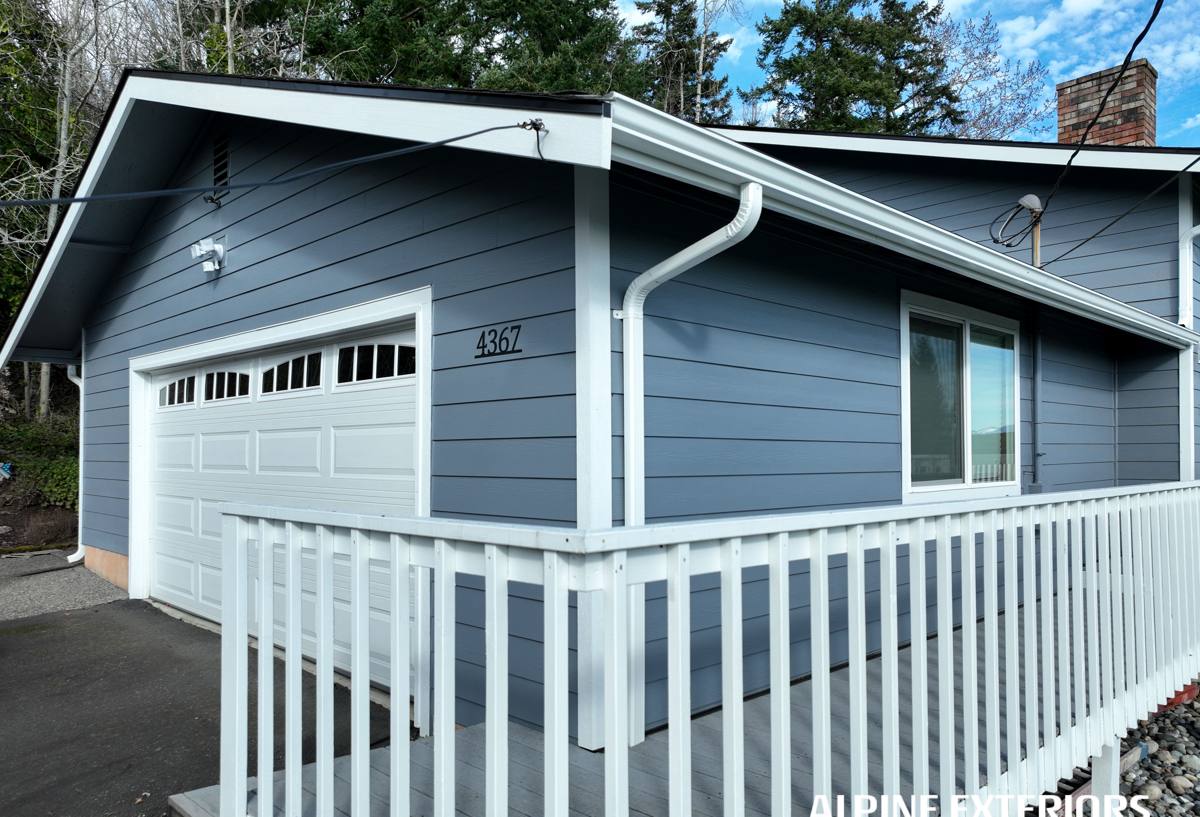
What Driving Rain, Salt Air, and Moss Actually Do to a Roof
Wind-Driven Rain and Flashing
Bellingham doesn't usually get hard, straight-down rain — it gets rain pushed sideways by wind off the water. That matters because flashing (the metal at chimneys, valleys, skylights, and wall-to-roof transitions) is designed to shed water moving downhill, not water being driven uphill or sideways under a shingle edge. Once flashing seals age or seating shifts slightly, wind-driven rain finds its way in long before a shingle itself fails.
Moss, Moisture, and Shingle Life
Shaded, north-facing slopes in Sunnyland hold moisture longer than open, sun-exposed roofs elsewhere in the county. That moisture is what moss needs to establish. Once moss takes hold, it doesn't just sit on top of shingles — it lifts the edges as it grows, holds water against the granule surface, and accelerates the breakdown of the asphalt underneath. A roof with a heavy moss problem is often losing years of usable life even if it isn't leaking yet.
Salt Air and Metal Components
Being close to Bellingham Bay means the air carries a fine amount of salt, which speeds up corrosion on exposed metal — nails, flashing edges, gutter hardware, and vent caps. It's a slow process, but over a decade or more it's a real factor in why fasteners back out, why flashing seams open up, and why metal components need earlier attention here than they would further inland.
Signs a Sunnyland Roof Needs Repair
Most roof problems give warning signs well before there's an active leak inside the house. Worth checking for, or asking a crew to check for you:
- Dark streaking or thick moss growth, especially on shaded or north-facing slopes
- Granules collecting in gutters or at downspout outlets
- Curling, cupping, or lifted shingle edges
- Soft spots or slight sagging when walked (a crew should check this, not a homeowner on a ladder)
- Rust staining or visible gaps at flashing around chimneys, skylights, or vent pipes
- Water stains on interior ceilings, especially after a windy rainstorm rather than a calm one
- Daylight visible through the attic roof deck where there shouldn't be any
Any one of these on its own might be minor. Two or three together, especially on an older roof, usually means it's worth having someone look before the next wet season.
What a Correct Roof Repair Actually Involves
It's Not Just Patching the Spot That Leaked
A leak inside the house often shows up in a different spot than where the water actually entered — water travels along the underlayment and framing before it finds a way through the ceiling. A repair that only addresses the visible drip spot, without tracing the actual entry point, tends to come back within a season or two, sometimes worse.
What We Actually Check
A proper repair means getting on the roof (or in the attic, or both) and tracing the problem to its source: checking the flashing details, the condition of the underlayment in that section, whether the decking underneath has taken on moisture, and whether nearby shingles were damaged by the same event. Sometimes that means replacing a section larger than the visible damage — not to run up the job, but because patching around compromised material just moves the failure point a few feet over.
Repair or Replace? What Actually Drives That Decision
Homeowners often assume any roof problem means a full replacement is coming. In our experience, that's true less often than people expect — but the factors below are what actually determine which way it goes.
| Factor | Points Toward Repair | Points Toward Replacement |
|---|---|---|
| Age of roof | Under roughly 15–18 years (asphalt) | Approaching or past expected lifespan |
| Extent of damage | Localized — one slope, one flashing detail | Spread across multiple slopes or layers |
| Decking condition | Solid, dry decking under the damaged area | Soft, rotted, or repeatedly wet decking |
| Moss history | Light growth, caught early | Years of untreated heavy moss |
| Leak history | First occurrence or isolated event | Recurring leaks in different spots over time |
An honest repair recommendation only holds up if someone actually gets on the roof and checks the decking, not just the shingles. That's a step worth confirming with any contractor before agreeing to a scope of work.
Our Process When We Come Out to Sunnyland
Inspection First, Not a Guess Off the Ground
We walk the roof and check the attic where accessible, rather than quoting a repair based on what's visible from the driveway. In a neighborhood with as much tree cover as Sunnyland, ground-level views often miss moss buildup and debris sitting on shaded slopes.
A Clear, Written Scope
Before any work starts, you get a written explanation of what we found, what we're repairing, and why — not just a price. If the honest answer is "this section is fine, but that valley needs attention," that's what we'll tell you.
The Repair Itself
We remove and replace compromised material back to sound decking and shingle, rebuild flashing details properly rather than caulking over old seams, and match materials so the repaired section holds up and blends in reasonably well with the surrounding roof.
Cleanup and Follow-Up
We clear debris and old material from the site and gutters, and we'll tell you plainly if we saw anything else worth keeping an eye on — like early moss on an adjacent slope — even if it's not part of the current repair.
Materials We Use, and Why
For repair work, matching the existing roofing system matters more than upgrading to something unrelated. Mixing incompatible underlayment or flashing metals can create new problems — galvanic corrosion between dissimilar metals, or moisture behavior mismatches between old and new underlayment.
Where a repair touches an area with a history of moss, we favor corrosion-resistant fasteners and flashing given the salt-air exposure common across Bellingham, and we'll talk through zinc or copper strip options for ongoing moss suppression on shaded slopes if that fits the situation. We don't push a specific brand as a cure-all — the right call depends on the existing roof system, the slope's exposure, and what's realistic for the homeowner's budget and timeline.
Why a Crew That Already Works Sunnyland Matters
Roofing problems in this part of Bellingham follow patterns — which slopes hold moss longest, which flashing details tend to fail first on homes of a certain age, how much tree debris a given block deals with each fall. A crew that's already worked in Sunnyland has seen those patterns enough times to know what to check first, instead of treating every inspection as a blank slate.
There's also a practical side: knowing the neighborhood means knowing realistic access, typical roof pitches and styles in the area, and what permitting or disposal logistics actually look like for this part of Whatcom County — all of which keeps a repair job on schedule instead of running into surprises mid-project.
Keeping a Sunnyland Roof Ahead of Moss and Rain
Between repairs, a bit of regular attention goes a long way in this climate:
- Clear gutters and downspouts at least twice a year — more often under heavy tree cover
- Remove moss growth promptly rather than letting it establish over a full wet season
- Trim back branches that keep a section of roof shaded and slow to dry
- Check attic ventilation — poor airflow keeps the underside of the deck damper longer
- Have flashing and valleys checked every few years, not just after a leak appears
None of this replaces a proper inspection, but it does slow down the wear that driving rain, salt air, and moss cause between one.
If you're dealing with a leak, moss buildup, or just want an honest read on where your Sunnyland roof stands, we're happy to take a look. Reach out for a free, no-pressure estimate using the form below.