 Bellingham
 Custom Decks for York Homes: Built for Whatcom County's Marine Climate
York is one of the residential pockets in and around Bellingham where the outdoor living season is short but real, and where a deck spends most of the year absorbing whatever the Whatcom County sky sends down. That means salt-tinged marine air moving in off the water, rain that hits from an angle as often as it falls straight down, and a moss season that can run from fall through spring on decks that don't get much direct sun. A deck built without those specifics in mind can look fine for a season or two and then start showing problems, soft boards, corroding fasteners, a slick walking surface, right around the time you'd expect to be using it most.
We build custom decks for York and the surrounding Bellingham area with that climate as the starting assumption, not an afterthought. That shapes material choices, framing details, and fastener selection well before the first board goes down.
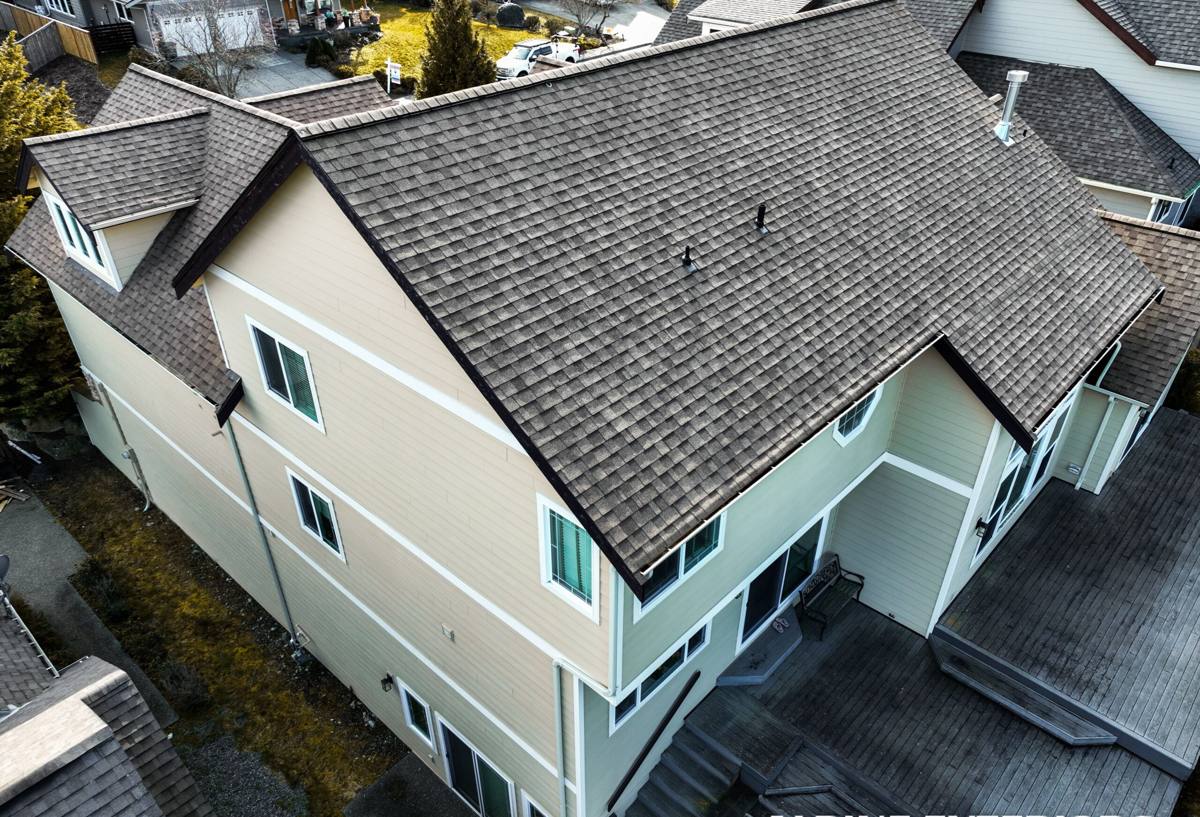
What This Climate Does to a Deck
Salt Air and Metal Corrosion
Bellingham's proximity to the bay and the Salish Sea means a steady low-level salt content in the air, even away from the immediate waterfront. Standard-grade fasteners, brackets, and hardware corrode faster under that exposure than they would inland, and a rusting bolt at a structural connection is a much bigger problem than surface rust on a railing bracket. It's slow, quiet damage that's easy to miss until a connection actually fails.
Driving Rain and Hidden Moisture
Wind-driven rain is a fact of life across this part of Whatcom County, and it doesn't just fall on a deck's surface, it gets pushed sideways into ledger connections, under railing posts, and into any gap where end grain is exposed. A deck built to a drier climate's standard can let water track into framing members in ways that aren't visible from above until the wood underneath has already started to soften.
A Long Moss and Algae Season
Mild temperatures, tree cover, and near-constant dampness add up to extended moss and algae growth on deck surfaces, especially on boards that stay shaded most of the day. Beyond looking bad, that growth turns a deck surface slick and genuinely dangerous underfoot, and it's a maintenance issue that never fully goes away here, it just gets managed better or worse depending on how the deck was built.
Choosing the Right Decking Material for This Climate
Composite Decking
Composite boards resist moisture absorption far better than natural wood and don't need staining or sealing to hold up. In a climate with this much sustained dampness, that's a real advantage, though composite surfaces still need periodic cleaning to keep moss and algae from taking hold, especially on shaded sections.
Cedar and Other Natural Wood
Cedar has a natural look a lot of homeowners want, and it holds up reasonably well to moisture compared to other softwoods. But it requires an ongoing maintenance schedule, sealing or staining every couple of years, to keep water from working into the grain. In a climate this wet, that schedule tends to slip, and a neglected cedar deck ages faster here than the same deck would somewhere drier.
Pressure-Treated Framing Lumber
Regardless of what decking surface goes on top, the framing underneath should be pressure-treated lumber rated for ground contact where it's called for, with all cut ends and drilled holes field-treated before assembly. This is the part of a deck nobody sees once it's finished, and it's also the part that determines how long the whole structure actually lasts.
| Material | Moisture Behavior | Maintenance | Typical Lifespan |
|---|---|---|---|
| Composite decking | Doesn't absorb water into the board itself | Periodic cleaning to control surface moss/algae | Long-lasting with minimal upkeep |
| Cedar | Naturally moisture-resistant but still absorbs over time | Sealing or staining every 1-3 years | Shorter if maintenance schedule slips |
| Pressure-treated framing | Treated to resist rot at ground contact | Low, once properly installed and treated at cuts | Structural lifespan of the deck itself |
What a Correct Deck Build Actually Requires
Ledger Board Attachment and Flashing
The ledger board, where the deck attaches to the house, is the single most common source of long-term deck failure in a wet climate. It needs proper flashing that sheds water away from the house framing, correct fastener spacing and type, and a gap or membrane detail that keeps water from tracking behind the siding at that connection. Get this wrong and the damage often shows up inside the wall before it shows up on the deck.
Footings, Post Bases, and Frost Depth
Footings need to be set below frost depth and sized correctly for the loads they're carrying, with post bases that hold the post above standing water and grade rather than letting wood sit directly on or in concrete where moisture collects. This is inspected work for a reason, it's the part of the deck that's genuinely hard to fix later.
Fasteners and Hardware Corrosion Resistance
Given the salt content in the air here, we spec stainless steel or heavy hot-dip galvanized fasteners and structural hardware rather than standard coated screws, particularly at any connection carrying real structural load. It costs more up front and it's the difference between hardware that's still sound in fifteen years and hardware that's rusting through in five.
Drainage and Board Spacing
Board spacing needs to account for wood movement and water shedding, not just look tight and clean on installation day. Decking that's gapped too tight traps moisture and debris between boards, which is exactly the setup that accelerates rot and gives moss somewhere to establish itself.
Our Deck-Building Process
- Site visit and design: We walk the property, talk through how you actually plan to use the space, and account for sun exposure, drainage, and grade before drawing anything up.
- Permitting and engineering: Decks in Whatcom County typically require a building permit, and we handle that process along with any structural details the permit reviewer requires.
- Footings and framing: Footings are set to proper depth, and framing goes up using treated lumber and corrosion-resistant hardware sized to the actual loads.
- Decking, railing, and stairs: Surface material and railing go on according to manufacturer spec, with attention to spacing, fastening, and any local code requirements for guard height and baluster spacing.
- Final walkthrough: We go over the finished deck with you, including what maintenance, if any, the material you chose actually needs going forward.
Deck Cost Factors in York
| Factor | What It Affects | Why It Matters Here |
|---|---|---|
| Size and footprint | Total material and labor | Larger decks mean more framing connections and more surface exposed to weather |
| Decking material | Upfront cost vs. long-term maintenance | Composite costs more initially but needs less upkeep in this moisture-heavy climate |
| Elevation and stairs | Framing complexity and railing requirements | Taller decks need more robust footings and code-required guard rail detailing |
| Site access and grade | Labor time and equipment needs | Sloped lots common around Bellingham can add excavation and footing work |
| Ledger vs. freestanding design | Attachment method and flashing scope | Ledger-attached decks require careful flashing at the house connection to prevent hidden moisture damage |
These are the variables that move a price, not a fixed number, which is why we walk the actual site before quoting.
Signs Your Existing Deck Needs Attention
- Soft, spongy, or spring-feeling boards, especially near the house or at stair treads
- Rust staining running down from fasteners, brackets, or railing posts
- Moss or algae that returns quickly after cleaning, particularly on shaded sections
- Gaps opening up at the ledger board or flashing pulling away from the house
- Wobbly railings or posts that have shifted at their base connection
- Visible daylight or gaps at footings, or a post that no longer sits fully on its base
Repair vs. Full Rebuild
Not every aging deck in York needs to come down. A handful of soft boards, a railing section, or surface-level wear can often be repaired without touching the structure underneath, especially if the framing and footings are sound. But once moisture has been working into the ledger connection or footings for years, or the framing itself is an older, undersized design, patching the surface just delays a bigger problem. We'll tell you honestly which situation your deck is actually in rather than defaulting to the bigger job.
Why a Local Crew That Already Works in York Matters
A crew that regularly builds and repairs decks around Bellingham has already seen how salt air, driving rain, and a long moss season play out on real decks over real winters, not just how a material performs on a spec sheet. That experience shows up in small decisions on build day, where extra flashing attention pays off, which fastener grade is worth the added cost, how boards should be spaced for this specific climate, and those decisions are what keep a deck from becoming a callback two or three years down the road.
If you're planning a new deck in York or need an honest look at one that's showing its age, we're glad to come take a look. Reach out using the form below to schedule a free, no-pressure estimate.