 Bellingham
 Building a Deck That Actually Holds Up in York's Climate
The York neighborhood sits inside Bellingham's marine climate zone, and that climate is not gentle on outdoor wood structures. Homes here deal with salt-tinged air moving in off the water, long stretches of driving rain through the fall and winter, and a moss season that can run from October well into May. A deck built with generic, one-size-fits-all methods will show its age fast in this environment — cupped boards, rusted fasteners, slick green film on the walking surface, and soft spots where water has been sitting where it shouldn't. A deck built correctly for this specific climate will still look and perform like new a decade later.
This page covers what a deck in and around York actually needs to hold up, what a correct build involves from the ground up, how our process works from first call to final walkthrough, and why it matters to hire a crew that already works in this part of Whatcom County rather than a contractor learning the local conditions on your project.
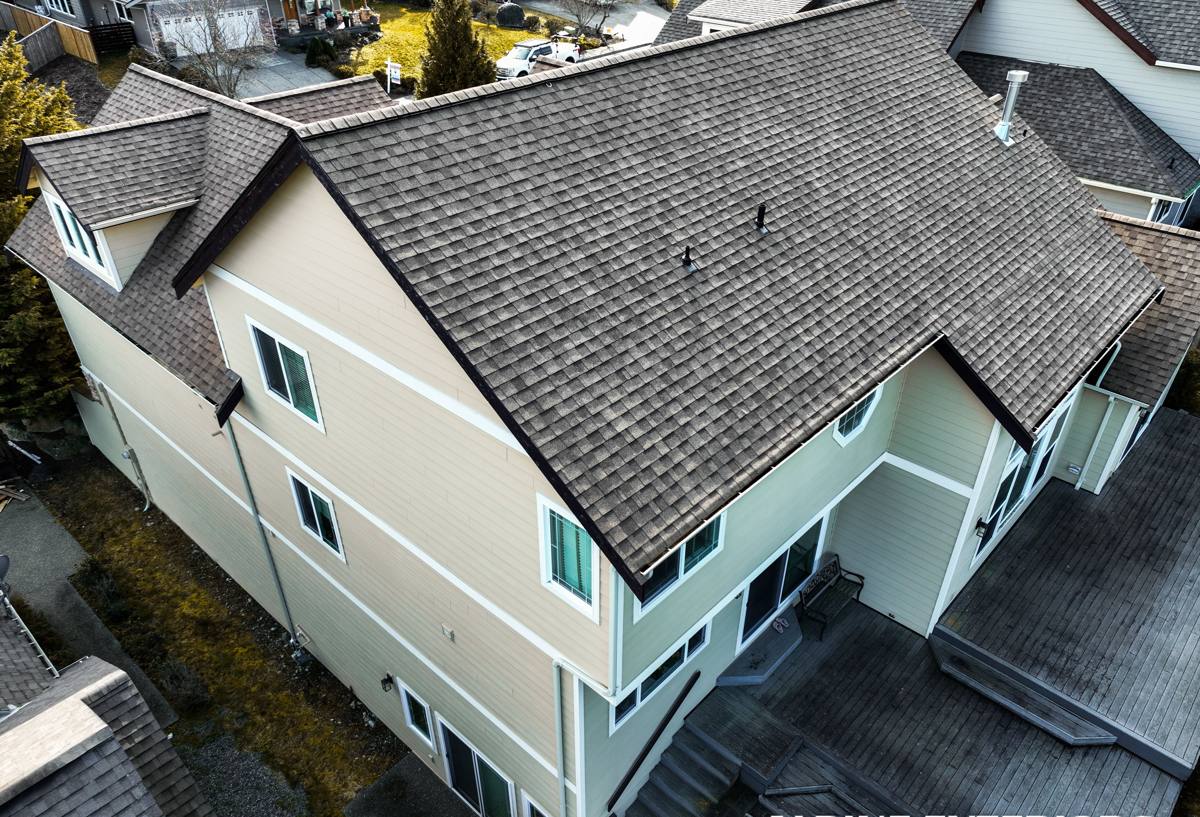
What This Climate Actually Does to an Outdoor Deck
Salt Air and Corrosion
Bellingham's proximity to the water means the air carries more salt and moisture than an inland climate would. That doesn't just affect boats and cars — it accelerates corrosion on any fastener, bracket, or connector that isn't rated for it. Standard interior-grade screws or basic zinc-coated hardware can start rusting within a couple of seasons here, and once a fastener corrodes, it loses grip strength long before it looks obviously bad. That's a structural problem hiding in plain sight.
Driving Rain and Water Intrusion
Rain in this area rarely falls straight down. Wind-driven rain hits siding and ledger connections at an angle, which means the single most common failure point on a deck — where it attaches to the house — needs real flashing detail, not just a bead of caulk. Water that gets behind a ledger board and can't escape will rot the rim joist and sheathing behind it long before anyone notices from the outside.
Moss, Algae, and Extended Shade
Tree cover and the region's long damp season create ideal conditions for moss and algae to take hold on horizontal wood surfaces. Beyond looking neglected, a mossy deck surface is a genuine slip hazard, especially on stairs. Moss growth is also a sign of moisture sitting where it shouldn't — usually a spacing, drainage, or coating issue rather than something you can just scrub away and forget.
Choosing the Right Decking Material for a Wet, Shaded Lot
There's no single "best" decking material — there's a best material for your specific lot, budget, and how much upkeep you actually want to do. For a York-area property with regular shade and rain exposure, the trade-offs below matter more than they would in a drier climate.
| Material | Moisture & Moss Resistance | Maintenance | Typical Lifespan |
|---|---|---|---|
| Pressure-treated wood | Fair — absorbs water, needs sealing to resist moss and rot | Annual cleaning and resealing recommended | 15-20 years with upkeep |
| Cedar | Good natural rot resistance, but still needs sealing in this climate | Periodic cleaning, sealing every 1-2 years | 15-25 years with upkeep |
| Capped composite | Very good — cap layer resists moisture absorption and staining | Occasional washing, no sealing or staining | 25-30+ years |
| PVC decking | Excellent — fully synthetic, doesn't absorb moisture | Occasional washing | 25-30+ years |
Wood costs less up front and has a natural look that some homeowners strongly prefer, but it asks for real annual maintenance to keep moss and moisture damage in check under this much shade and rain. Composite and PVC cost more initially but shed water and resist moss growth far better, which matters more on a shaded York lot than it would on an open, sunny site. We'll walk you through the honest trade-offs for your specific yard rather than pushing one material across the board.
The Structural Details We Don't Skip
The decking surface is what you see, but the structure underneath is what determines whether the deck is still safe in fifteen years. In this climate, a few details matter more than average:
- Footings below frost depth and properly drained — a footing sitting in standing water will heave and shift over time.
- Ledger flashing that actually sheds water away from the house — not just caulk, but a proper flashing detail with a water-resistant barrier behind it.
- Joist tape on all cut and exposed wood surfaces — this is the single cheapest thing that most extends the life of a wood-framed deck in a wet climate.
- Corrosion-rated fasteners and hardware — matched to whichever decking material is used, since dissimilar metals can accelerate corrosion in each other.
- Proper board spacing and airflow underneath — tight spacing traps moisture and speeds up moss growth; too much airflow restriction underneath does the same to the framing.
None of this is visible once the deck is finished, which is exactly why it's worth asking a contractor how they handle it before work starts, not after.
Permits and Code Requirements in Whatcom County
Most elevated decks in Bellingham and unincorporated Whatcom County require a building permit, and inspections typically check footing depth, ledger attachment, guardrail height, and baluster spacing before the project can be signed off. General guardrail height requirements run in the 36-42 inch range depending on deck height, and baluster spacing is typically capped so a 4-inch sphere can't pass through — but exact requirements depend on your specific deck height, jurisdiction, and current code cycle, so we confirm the applicable code details for your address before design work is finalized rather than assuming. Skipping the permit step might save time up front, but it can create real problems at resale when a buyer's inspector flags unpermitted structural work.
Our Deck Building Process, Start to Finish
- Site visit and design conversation. We look at drainage, sun and shade exposure, tree cover, and how the deck connects to the house before talking materials or layout.
- Material and layout selection. We walk through the honest trade-offs of wood versus composite versus PVC for your specific site and budget.
- Permit handling. We prepare and submit the permit package so the project meets current Whatcom County or City of Bellingham requirements.
- Footings and framing. Footings are set below frost depth with proper drainage; framing is built with corrosion-rated hardware and joist tape on exposed cuts.
- Ledger attachment and flashing. This connection gets the most attention on the entire project, since it's the most common point of long-term water damage.
- Decking, railing, and stairs. Installed with proper spacing for drainage and airflow, and fasteners matched to the material.
- Final walkthrough and inspection. We review the finished deck with you and make sure it passes any required municipal inspection.
Fasteners and Hardware Built for Salt Air
Hardware choice is one of the least glamorous parts of a deck build and one of the most important in this climate. The table below is a general guide to what we consider for coastal-influenced, high-moisture sites like York.
| Hardware Type | Why It Matters Here |
|---|---|
| Stainless steel fasteners | Best long-term resistance to salt-air corrosion, especially near ground level and on railings |
| Hot-dip galvanized structural connectors | Heavier coating than standard galvanized, holds up better under sustained moisture exposure |
| Coated structural screws rated for treated lumber | Prevents the chemical reaction that occurs between untreated fasteners and modern treated wood |
Using the wrong fastener grade is invisible on installation day and expensive five years later, when hardware starts failing under normal load. We match hardware to material and exposure rather than defaulting to whatever is cheapest.
Deck Maintenance Checklist for York Homeowners
Even a well-built deck needs a bit of seasonal attention in this climate. A short annual routine prevents most of the problems we get called out to fix on decks that were otherwise built well.
- Sweep leaves and debris off the deck surface regularly through fall, especially between boards.
- Check for moss buildup on stairs and shaded areas heading into winter, and clean it off before it gets slick.
- Inspect the ledger board area at the house connection once a year for any staining or soft wood.
- Reseal wood decking on the manufacturer's recommended schedule — don't wait until it visibly grays out.
- Trim back overhanging branches to reduce shade, debris, and moisture buildup on the deck surface.
- Check railing and stair fasteners periodically for early signs of rust or looseness.
Why Hiring a Crew That Already Works in York Matters
A deck contractor who mostly builds in drier, sunnier parts of the country will design and detail a deck differently than one who works regularly in Bellingham's marine climate. Knowing how much shade a typical York-area lot gets through the wet months, how aggressively moss develops on north-facing sections, and how driving rain behaves against a ledger connection isn't something you get from a general contracting background — it comes from building decks in this specific climate repeatedly. That local familiarity also means fewer surprises during the permitting process, since we already know what Whatcom County and City of Bellingham inspectors are looking for on deck projects. If something needs attention after the build — a fastener that needs a look, a drainage question after a heavy winter — being a local crew means a fast, straightforward response instead of a long wait.
If you're planning a new deck or replacing one that hasn't held up to a York winter, we're happy to take a look and give you a straightforward, no-pressure estimate. There's a form below — reach out and we'll walk the site with you and talk through what actually makes sense for your home.