 Bellingham
 Building New in York? The Windows Are Where Most Problems Start
If you're framing a new home or an addition in the York neighborhood, the windows are one of the few components that have to get everything right the first time. Once siding, trim, and interior finish go on, a poorly flashed window opening becomes a hidden problem — one that usually doesn't show up until there's a stain on the drywall two winters later. New-construction window installation isn't just "put the window in the hole." It's a sequence of flashing, sealing, and fastening steps that has to match how water actually moves across a wall in this part of Whatcom County.
York sits close enough to the water and the hillside tree cover that homes here deal with a specific combination of weather: salt-laden air off Bellingham Bay, wind-driven rain that doesn't fall straight down, and a moss season that runs longer than most homeowners expect. New-construction windows give you one real chance to build for that before the wall is closed up. We install to that standard on every job, not just the ones where it's convenient.
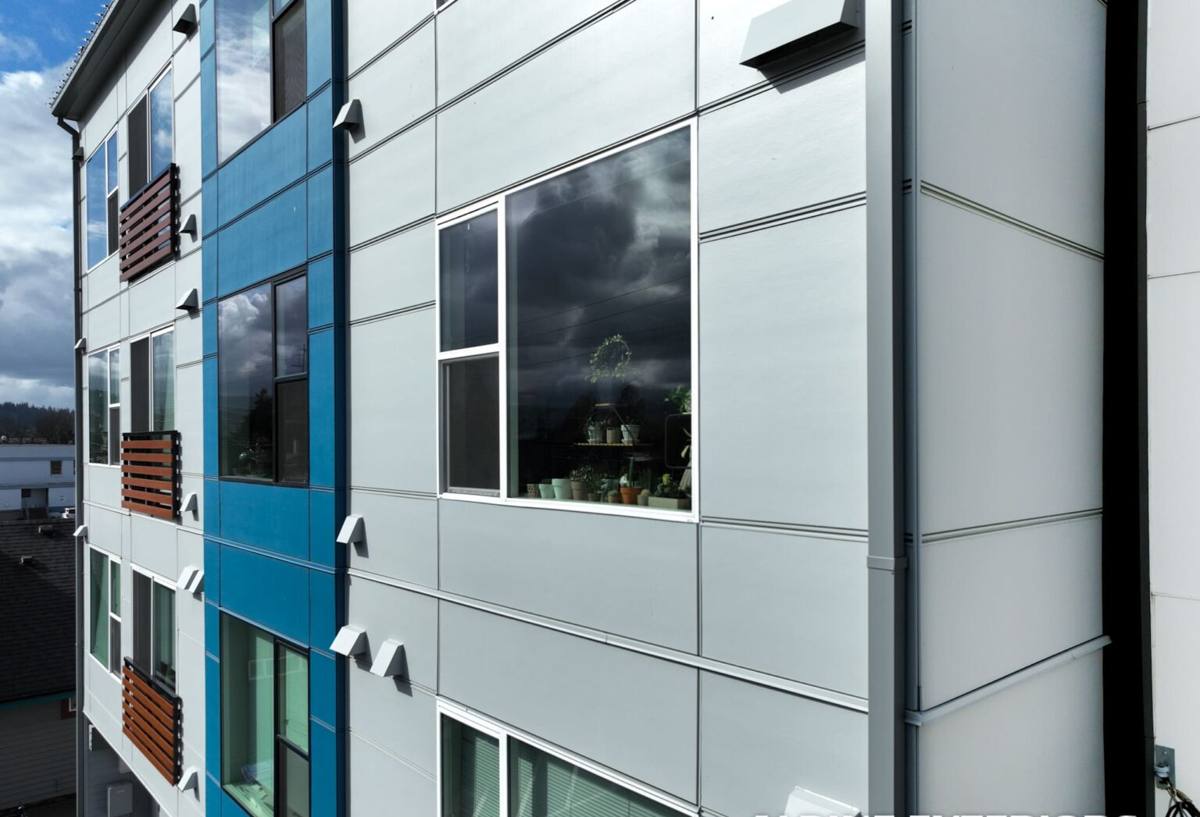
What Bellingham's Climate Actually Does to a Window Opening
Whatcom County doesn't get the heaviest rainfall totals in the state, but it gets a lot of low-intensity, wind-pushed rain over long stretches — the kind that finds every gap a hard downpour would miss. A window that's only sealed against water falling straight down will leak in a York wind event within a few seasons.
Salt Air
Proximity to the bay means airborne salt settles on exterior surfaces, including window frames, hardware, and fasteners. Over time this accelerates corrosion on lower-grade metal components and can degrade certain finishes faster than the manufacturer's inland warranty testing accounts for. We factor this into frame material and fastener selection rather than treating it as an afterthought.
Driving Rain
Wind off the water pushes rain sideways and upward under eaves and around trim. The flashing sequence around a new-construction window — not just the window itself — is what stops that water from getting behind the cladding. This is the single biggest factor in whether a new build stays dry.
Moss and Prolonged Dampness
Bellingham's moss season is long, and moss holds moisture against whatever it grows on. Sills, trim, and lower window components that stay damp for weeks at a time are more prone to rot if the wrong material or a poor drainage detail is used. Detailing the sill so water sheds away, rather than pools, matters more here than in drier climates.
What a Correct New-Construction Window Install Actually Involves
New-construction windows have a nailing fin (also called a flange) that's designed to be integrated into the wall's water-resistive barrier during framing — before siding goes on. Done right, the sequence looks like this:
- Rough opening is checked for square, level, and correct dimensions before the window ever arrives on site.
- Sill pan flashing is installed first, sloped to drain any water that gets past the window back to the exterior — not into the wall cavity.
- The window is set, shimmed level and plumb, and fastened per the manufacturer's schedule (skipping fastener locations is a common shortcut that shows up as air and water leaks later).
- The nailing fin is flashed with side flashing, then head flashing, each piece overlapping the one below it — a shingle-style sequence so water always flows down and out, never behind the layer below.
- The whole assembly is integrated into the house wrap or weather-resistive barrier in the correct order, then sealed at the specified points (not everywhere — over-sealing can trap moisture instead of releasing it).
- Interior and exterior trim goes on last, once the water management layer is confirmed continuous.
Every one of those steps is inspectable before the wall closes up — which is exactly why new construction is the right time to get it done correctly. Retrofitting a bad flashing job after siding is on is far more disruptive and expensive than doing it right during the build.
Choosing the Right Window for a York-Area Build
Frame material affects how a window holds up to salt air, moisture, and temperature swings over the decades, not just how it looks on day one. There's no single "correct" answer — it depends on budget, exposure, and how much upkeep you want to take on.
| Material | How It Handles Salt Air & Moisture | Maintenance | Typical Fit |
|---|---|---|---|
| Vinyl | Good — won't corrode or rot; seams and hardware quality vary by manufacturer | Low | Budget-conscious new builds, most rooms |
| Fiberglass | Very good — dimensionally stable, resists corrosion, holds paint well near the coast | Low to moderate | Homes with more direct wind/salt exposure |
| Wood-Clad | Depends heavily on cladding integrity — once the exterior clad layer is compromised, the wood beneath is exposed to prolonged Bellingham dampness | Higher — needs monitoring at joints and sills | Homeowners prioritizing interior wood aesthetic, willing to maintain it |
| Aluminum | Conducts cold and can corrode faster in salt air unless properly finished | Moderate | Less common for residential new construction here |
We'll walk through these trade-offs against your specific site — how exposed the elevation is to prevailing wind and rain, how much sun the wall gets to help things dry out, and your long-term maintenance appetite — rather than defaulting to one product for every job.
Our Process, Start to Finish
For new-construction window work in York, we coordinate directly with your builder or general contractor so window installation lands at the right point in the framing schedule — not too early, not after the wall's already closed up around a gap.
- Plan review: We check window schedules, rough opening sizes, and manufacturer specs against the actual framing before ordering.
- Site walk: We look at exposure — which walls face prevailing wind and rain, which sit under moss-prone tree cover — and flag any elevations that need extra attention.
- Flashing and install: Sill pan, window set, shingle-lapped flashing, and WRB integration, done to manufacturer instructions so the warranty stays intact.
- Documentation: Photos of the flashing sequence before it's covered by siding, so there's a record of what's behind the wall if it's ever needed.
- Final check: Operation, seal, and trim are confirmed before we sign off.
Mistakes We See on Other New-Construction Jobs
Most window leaks we get called to diagnose in this area trace back to a handful of avoidable errors: flashing installed out of shingle-lap order so water gets funneled behind the WRB instead of over it; sealant used as a substitute for proper flashing rather than a supplement to it; missed fasteners that leave a window under-secured against wind loads; and sill pans skipped entirely on the assumption that "the window is sealed anyway." Every one of these passes a quick visual inspection right after install and only shows itself once the first real driving rain of the season hits the wall. That's why the inspection point — before siding goes on — matters so much.
Energy Code and Permitting in Whatcom County
New windows in a new build have to meet current Washington State Energy Code requirements for U-factor and, depending on your project, solar heat gain coefficient. Your window schedule needs to match what's on the approved plans, and installation needs to support whatever air-sealing detail your energy code path requires (prescriptive or performance). We coordinate window specs and installation sequencing so this lines up with inspection, instead of finding a mismatch after the windows are already ordered.
Why Hiring a Crew That Already Works in York Matters
A lot of window problems in this climate aren't about the window itself — they're about how it was integrated into the wall for the specific conditions of the site. A crew that regularly works new construction around Bellingham Bay already knows which elevations in a neighborhood like York tend to take the worst of the wind-driven rain, how much moss buildup to expect on north-facing trim, and which flashing details hold up over time versus which ones look fine on install day and fail in year three. That's not something you get from a general handyman crew doing their first coastal Washington install.
A Quick Checklist Before Your Windows Go In
- Confirm rough openings match the approved window schedule before delivery
- Verify sill pan flashing is planned for every window opening, not just ground-floor units
- Ask what fastener and flashing sequence will be used, and confirm it follows manufacturer instructions
- Check that window U-factor and SHGC values match your energy code compliance path
- Request photos of flashing before siding covers the opening
- Discuss frame material trade-offs for your specific elevation's wind and rain exposure
Get a Free Estimate for Your York New-Construction Windows
If you're framing a new home or addition in York and want the window package handled by a crew that understands what Bellingham's salt air, driving rain, and moss season actually do to a wall over time, we'd be glad to take a look at your plans. Fill out the form below for a free, no-pressure estimate — we'll talk through window options, flashing details, and timing with your build schedule.