 Bellingham
 Why Sudden Valley Roofs Wear Out Faster Than You'd Expect
Sudden Valley sits under heavy tree cover along Lake Whatcom, and that canopy is a mixed blessing for a roof. The same fir and cedar that make the community shady and quiet also keep roof surfaces damp long after a storm passes. Sun exposure that would normally dry a roof out between rains is blocked for hours at a time on many lots, and that extra dwell time is exactly what moss, algae, and lichen need to take hold.
Add in the driving rain that comes through with Pacific storm systems and the moisture-laden marine air that settles over Whatcom County for much of the year, and you get a climate that's genuinely tougher on roofing than drier parts of the state. Asphalt granules erode faster under sustained damp, wood decking stays wet longer after a leak starts, and organic growth works its way under shingle tabs before most homeowners notice anything is wrong. None of this means Sudden Valley homes need exotic solutions — it means the installation details have to be right, not just adequate.
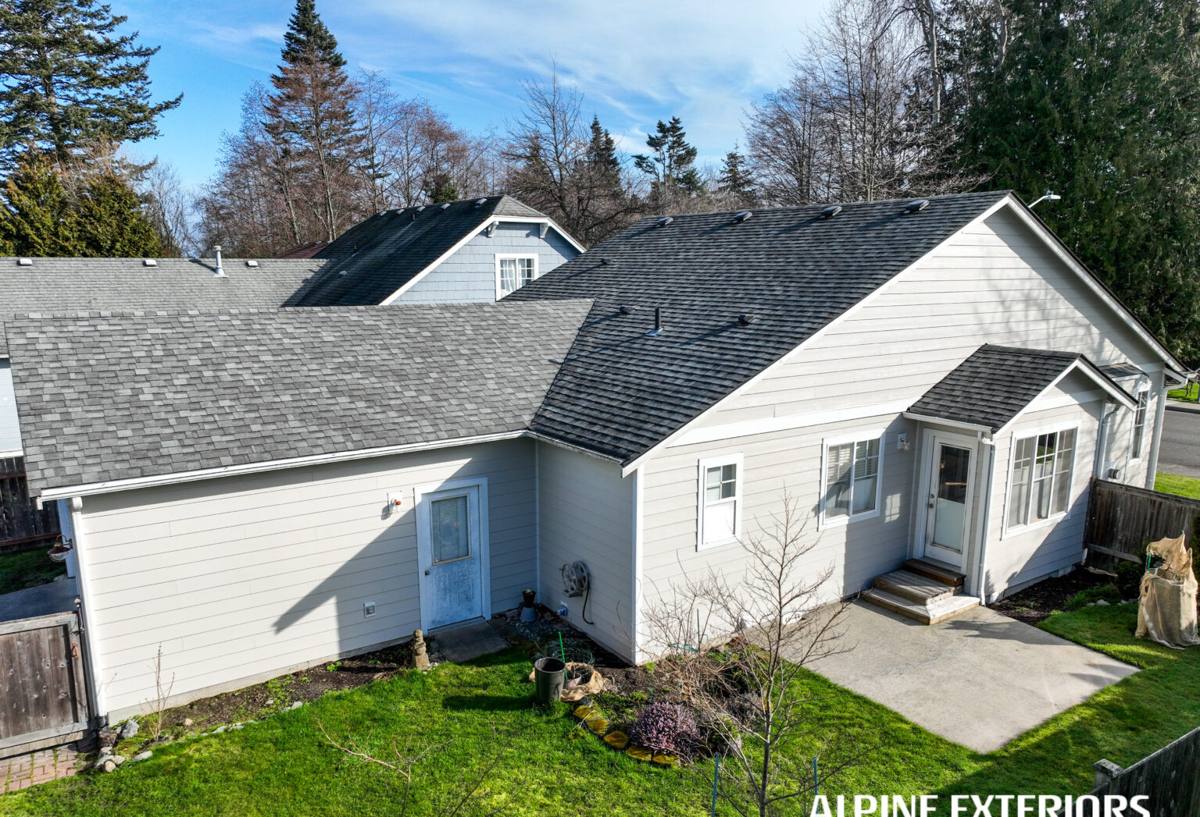
Signs a Repair Won't Cut It Anymore
Roof repairs make sense for isolated damage — a cracked flashing, a handful of wind-lifted shingles. Full replacement becomes the honest recommendation when the roofing system itself, not just a section of it, has aged out or been compromised. Before we quote a job, we look for:
- Granule loss heavy enough that you can see bare, shiny patches on multiple slopes
- Shingles that are cupping, curling at the edges, or cracking when lightly flexed
- Moss or algae mats thick enough to hold water against the shingle surface, not just surface staining
- Soft or spongy decking felt underfoot in the attic, or daylight visible through the roof deck
- Repeated leaks in different spots rather than one recurring trouble area
- A roof past 20-25 years old (for standard asphalt composition) with no major upgrades since installation
- Valleys and eaves showing chronic staining or granule buildup from years of trapped moisture
If you're only seeing one or two of these, a repair or a maintenance visit is often the right call, and we'll say so. We don't sell full replacements to homeowners who don't need one yet.
What a Correctly Done Roof Replacement Actually Involves
Tear-off and Deck Inspection
Every layer of old roofing comes off down to the deck. This is the step that gets skipped or rushed on cut-rate jobs, and it's the one that matters most in a climate like this — you can't know what condition the plywood or plank decking is in until it's exposed. Any soft, delaminated, or water-damaged decking gets replaced before anything new goes down. Roofing over a compromised deck just hides the problem for a year or two.
Ice and Water Protection Where It Counts
Eaves, valleys, and areas around chimneys and skylights get self-adhering waterproof membrane, not just standard felt. These are the spots where wind-driven rain and ponding moisture cause the most damage, and they're worth the extra material cost on every job, not just the ones that ask for it.
Underlayment and Flashing
A synthetic underlayment goes over the rest of the deck for a secondary water barrier, and all flashing — step flashing at walls, counter-flashing at chimneys, drip edge at the perimeter — gets replaced rather than reused. Old flashing that looks fine can have pinholes or gaps you won't see until the next hard rain finds them.
Correct Ventilation
Balanced intake and exhaust ventilation keeps attic moisture from condensing on the underside of the new deck. This matters more in shaded, high-humidity settings like Sudden Valley than in drier parts of Whatcom County, because the attic has less opportunity to dry out between wet spells.
Manufacturer-Spec Installation
Nailing pattern, exposure, and fastener count follow the shingle manufacturer's published specifications, not a shortcut version. This is also what keeps the material warranty valid — most manufacturers will deny a warranty claim if the installation didn't meet their spec, regardless of who installed it.
Choosing a Roofing Material for This Climate
There's no single "best" roofing material — the right choice depends on your home's exposure, your budget, and how much long-term maintenance you're willing to do. Here's how the common options stack up for a shaded, moisture-heavy lot:
| Material | Moss/Moisture Performance | Typical Lifespan | Maintenance |
|---|---|---|---|
| Architectural asphalt shingle | Good with algae-resistant (zinc/copper) granules | 25-30 years | Periodic moss removal on heavily shaded slopes |
| Standard 3-tab asphalt | Fair; more prone to granule loss in constant damp | 15-20 years | More frequent moss and algae treatment |
| Metal panel | Excellent; sheds moisture and resists moss growth | 40-50+ years | Low; occasional debris clearing |
| Cedar shake | Requires diligent upkeep in shaded, damp settings | 20-30 years with maintenance | High; regular treatment against rot and moss |
We don't install cedar shake as a default recommendation for heavily shaded Sudden Valley lots — not because it's a bad product, but because its moisture and maintenance demands are a poor match for a lot that stays damp under tree cover most of the year. If a homeowner wants that look and understands the upkeep involved, we'll talk through it honestly rather than talk them out of it.
What Drives the Cost of a New Roof Here
Every roof is priced on its own specifics, but the factors that move the number up or down are consistent. As a very rough starting point, most full replacements in this area land somewhere in the low five figures for a typical single-family roof with standard architectural shingles, with metal roofing and larger or more complex roofs running higher. Treat any number here as a planning range, not a quote — we'll only give you a real figure after we've actually looked at the roof.
| Factor | Why It Matters |
|---|---|
| Roof size and number of layers to remove | More tear-off labor and disposal cost |
| Roof pitch and complexity (valleys, dormers, skylights) | More flashing detail work and labor time |
| Decking condition | Rotted or soft plywood/plank needs replacement before install |
| Tree cover and access | Overhanging limbs and tight driveways affect staging and cleanup time |
| Material choice | Asphalt, metal, and shake carry very different material costs |
| Ventilation upgrades | Adding proper intake/exhaust vents where the old system was inadequate |
How We Handle a Sudden Valley Job
We start with a free, no-pressure inspection — on the roof and in the attic — so we can tell you honestly whether you need a repair or a replacement. If it's a replacement, the estimate breaks out material, labor, decking allowance, and any ventilation work separately, so you can see exactly what you're paying for.
Sudden Valley's private roads, gate access, and mature landscaping mean staging a job takes more planning than a typical in-town driveway. We coordinate delivery and dumpster placement to fit the site, protect landscaping and gutters during tear-off, and do a full magnetic nail sweep of the yard and driveway when the job wraps. Whatcom County and City of Bellingham permitting requirements are handled as part of the job, not left for the homeowner to sort out separately.
Ventilation and Moisture: The Part That Gets Skipped
A new roof with poor attic ventilation will still trap moisture, fog up in cold weather, and shorten the life of the new shingles from underneath. On shaded lots especially, we check existing intake (soffit vents) and exhaust (ridge or box vents) and correct any imbalance as part of the replacement — not as a costly add-on discovered later. Baffles get installed where insulation is blocking soffit airflow, which is a common issue on older homes that were insulated after original construction.
Keeping a New Roof Healthy After Installation
A correctly installed roof still needs some upkeep on a lot like this. A few practical habits go a long way:
- Clear needles and leaf debris from valleys and gutters at least twice a year, more often under heavy tree cover
- Trim overhanging branches back from the roofline to reduce shade, debris, and physical abrasion
- Have moss growth treated early, before it mats thick enough to hold water against the shingle
- Check attic ventilation isn't blocked by stored items or insulation after any attic work
- Schedule a walk-on inspection every few years, especially after major windstorms
Why Local Experience in Sudden Valley Actually Matters
A crew that's worked this community before knows the practical realities that don't show up in a generic estimate: how tight some of the access points are, how much staging space a given lot actually has, and how to work around mature trees without damaging root zones or landscaping. That experience shows up in fewer surprises mid-job and a cleanup that actually respects the property when the crew leaves.
It also means we're not guessing at how this climate treats a roof over time — we've seen what a roof looks like five and ten years after installation on shaded Whatcom County lots, and that shapes the materials and details we recommend now, not just what looks good on install day.
If you're weighing a repair against a full replacement, or just want an honest read on where your roof stands, we're glad to come take a look. The estimate is free, there's no pressure attached to it, and you'll get a straight answer either way — use the form below to get started.