 Bellingham
 Roof Repair Built for Sehome's Climate
Sehome sits close enough to Bellingham Bay that salt-laden air is a constant factor in how roofs age here, and close enough to Sehome Hill's tree cover that shade, falling debris, and moisture retention are part of daily life for a lot of roofs in the neighborhood. Add in Whatcom County's long, wet winters and the kind of driving rain that comes sideways off the water, and you get a climate that is genuinely harder on a roof than what most manufacturers test for. A repair that would hold up fine in a drier inland climate can fail here within a season or two if it isn't done with these conditions in mind.
We work on roofs throughout Bellingham, and Sehome's mix of older homes near the university area and newer infill construction means we see a wide range of roof ages, pitches, and past repair attempts. That variety is exactly why we don't treat roof repair as a one-size-fits-all patch job — what a 1970s low-slope roof needs is different from what a steep-pitch roof built in the last decade needs, even on the same street.
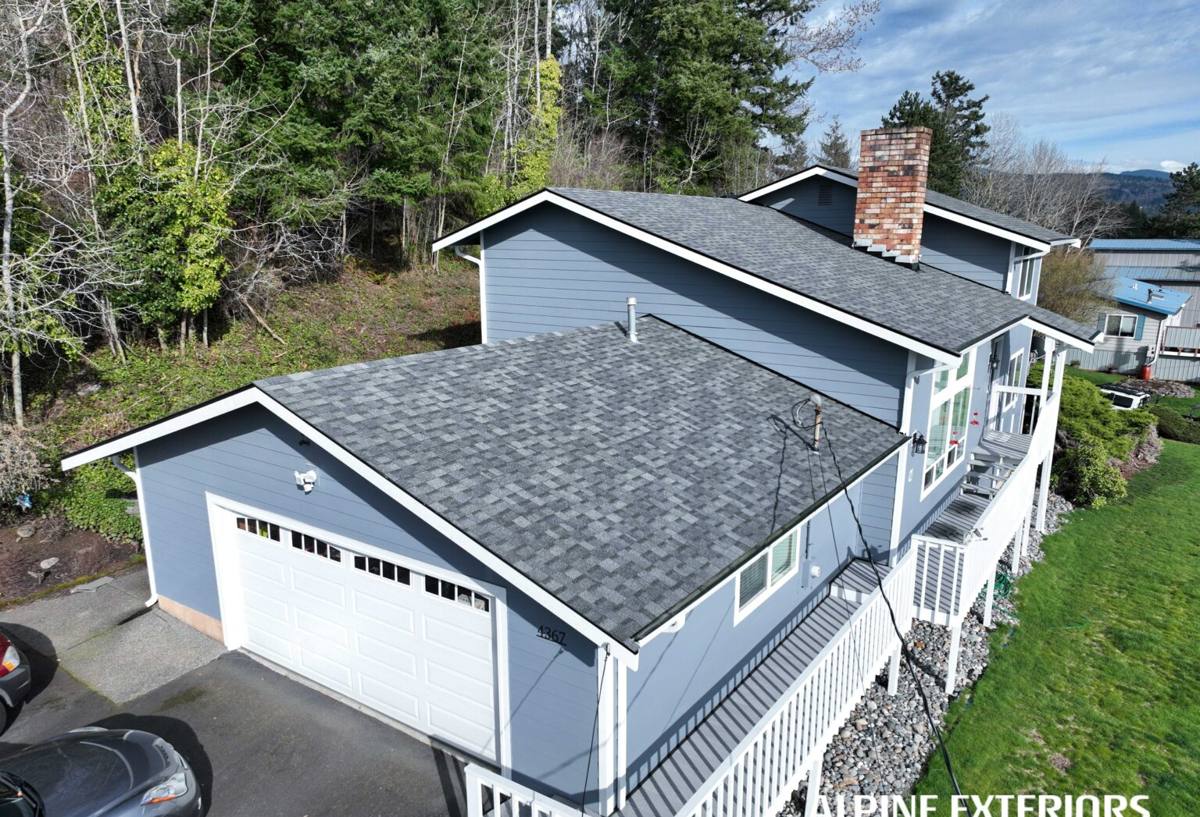
Why Moss and Moisture Drive Most Sehome Repair Calls
The single biggest reason we get called out to Sehome roofs isn't storm damage — it's moss. Bellingham's long, mild, wet stretches from fall through spring give moss and algae months at a time to establish themselves, and once moss gets a foothold under shingle tabs or along a north-facing slope, it holds moisture against the roofing material far longer than the manufacturer ever designed for. That constant dampness is what actually causes the damage: it accelerates granule loss on asphalt shingles, softens the wood underneath over time, and works its way into fastener holes and flashing seams.
How Moss Actually Causes Leaks
Moss doesn't just sit on top of a roof looking bad. As it grows, it lifts shingle edges slightly, which creates a path for wind-driven rain to get underneath rather than shedding over the top. Combined with the driving rain this area is known for, that small lift is often all it takes for water to start tracking sideways under the roofing layer and finding its way to a seam, a nail head, or a valley.
Salt Air's Slower, Quieter Damage
Salt air doesn't cause dramatic failures the way a storm does — it works gradually, accelerating corrosion on exposed metal flashing, roofing nails, gutter hardware, and any fasteners that aren't rated for coastal exposure. On an older Sehome roof, we regularly find that the shingles themselves still have some life left, but the metal components around chimneys, vents, and valleys have corroded to the point where they're the actual source of a leak.
Signs Your Sehome Roof Needs Repair, Not Just a Cleaning
A lot of homeowners call us for moss removal and it turns out the roof needs more than a wash. Here's what tells us a repair is warranted rather than routine maintenance:
- Dark streaking or thick moss growth concentrated on north- or shade-facing slopes
- Granules collecting in gutters or at the base of downspouts
- Shingle tabs that are curling, cracking, or visibly lifted at the edges
- Soft or spongy spots when walked (our crew checks this, not a DIY step)
- Water stains on interior ceilings, especially near chimneys, skylights, or where two roof planes meet
- Visible rust or corrosion on flashing around vents, chimneys, or valleys
- Daylight visible through the attic roof deck
- Gutters pulling away from the fascia or overflowing during heavy rain
If you're seeing more than one of these, it's worth having it looked at before the next wet season rather than after.
What a Correct Repair Actually Involves
A quick patch and a proper repair can look similar from the ground but behave very differently in a Bellingham winter. A correct repair starts with figuring out where water is actually entering — which is not always directly above the stain you see inside — and addressing the cause, not just the symptom.
Our Diagnostic Process
We inspect the roof surface itself, but also the flashing at every penetration (chimneys, vents, skylights), the valleys where two roof planes meet, and the condition of the roof deck underneath in the affected area. Because moss-related damage tends to be gradual, we also check adjacent areas that look fine today but show early signs of the same moisture exposure — catching that now is a lot cheaper than a second repair call next year.
What Gets Fixed, Not Just Covered
Depending on what we find, a proper repair might involve replacing damaged shingles and the felt or synthetic underlayment beneath them, resealing or replacing corroded flashing, addressing soft roof decking before new shingles go over it, and clearing moss with a method that doesn't damage the granule surface in the process. We also look at ventilation — a roof that isn't breathing correctly holds moisture longer, which feeds the exact moss and rot problems this climate already encourages.
Repair Materials: What Holds Up Here vs. What Doesn't
Not every roofing material or fastener performs the same in a salt-air, high-moisture environment. We choose materials for Sehome repairs based on what actually lasts here, not just what's cheapest to install.
| Material/Component | Performance in Sehome's Climate | Our Standard |
|---|---|---|
| Standard galvanized fasteners | Corrode faster near salt air exposure | Corrosion-resistant fasteners on repairs near the shoreline side of the neighborhood |
| Asphalt shingles (algae-resistant) | Slows but doesn't eliminate moss growth | Used as standard for shingle replacement sections; paired with proper ventilation |
| Standard felt underlayment | Degrades faster under repeated moisture exposure | Synthetic underlayment on repair sections for better moisture resistance |
| Bare aluminum flashing | Prone to pitting and corrosion over time in coastal air | Pre-finished or coated flashing where corrosion risk is higher |
| Ice-and-water shield at valleys/eaves | Critical given driving rain patterns | Standard on all valley and eave repair work |
Repair vs. Full Replacement — How We Decide
Most Sehome roofs we look at don't need full replacement — they need targeted repair done correctly, which is a fraction of the cost and buys years of additional life. We recommend replacement instead of repair when damage is spread across most of the roof rather than concentrated in one area, when the roof deck has widespread soft spots rather than isolated ones, or when the roof is already near the end of its expected lifespan and a repair would just be a short-term delay. We'll always tell you honestly which category your roof falls into.
Our Process, Start to Finish
- Inspection. We walk the roof, check the attic side where accessible, and identify the actual source of any leak or damage — not just where it's showing up inside.
- Written estimate. You get a clear explanation of what we found, what needs to be done, and why — no pressure to upgrade to a full replacement if a repair is the honest answer.
- Scheduling around the weather. Roof repair needs a reasonably dry window to be done right. We watch the forecast and schedule accordingly rather than rushing a repair into a wet spell.
- The repair itself. Damaged materials come out, the deck is checked and addressed if needed, and new materials go in matched to what the rest of your roof needs for this climate.
- Cleanup and walk-through. We clear debris, check gutters are flowing, and walk you through what was done.
Why a Crew That Already Works Sehome Matters
Roof repair isn't just about swinging a hammer — it's about knowing what a roof in this specific neighborhood, in this specific climate, is up against. A crew that works Bellingham and greater Whatcom County regularly already knows how moss behaves on shaded, tree-adjacent lots, how driving rain off the bay finds weak points in flashing, and how salt air shortens the working life of standard fasteners and metal components. That local pattern recognition means fewer repeat calls, because the repair addresses the actual cause the first time.
It also means straightforward logistics — a local crew can respond faster if a repair needs a follow-up check after the next big rain, and we're not learning this region's roofing challenges on your dime.
Maintaining Your Roof Between Repairs
A repair lasts longer when it's paired with basic seasonal upkeep. Keep gutters clear so water isn't backing up under roof edges, especially during peak fall leaf-drop. Keep overhanging branches trimmed back where reasonable, since falling debris and constant shade both contribute to moss growth. And have the roof looked at every couple of years even if nothing looks obviously wrong — catching early moss growth or a single lifted shingle is a much smaller job than waiting for a leak to show up on your ceiling.
If you're seeing moss buildup, a stain on a ceiling, or just want an honest opinion on where your roof stands, we're happy to take a look. Fill out the form below for a free, no-pressure estimate — we'll tell you straight whether you need a repair, a bigger fix, or nothing at all right now.