 Bellingham
 Siding Repair Built for Silver Beach's Climate
Homes in the Silver Beach area sit inside one of the wetter, mossier corners of Whatcom County, and the siding on those homes takes a steady beating for it. Salt-laden air moving in off the water, wind-driven rain that finds every gap and lap joint, and a moss season that can run eight or nine months out of the year all work on exterior cladding in ways that a drier inland climate simply doesn't produce. Siding repair here isn't a cosmetic afterthought — it's what keeps water out of wall cavities, keeps wood rot from spreading behind the surface, and keeps a home looking cared for instead of tired.
This page is about one thing: repairing existing siding on Silver Beach homes correctly, not just patching what's visible and hoping the underlying problem doesn't come back.
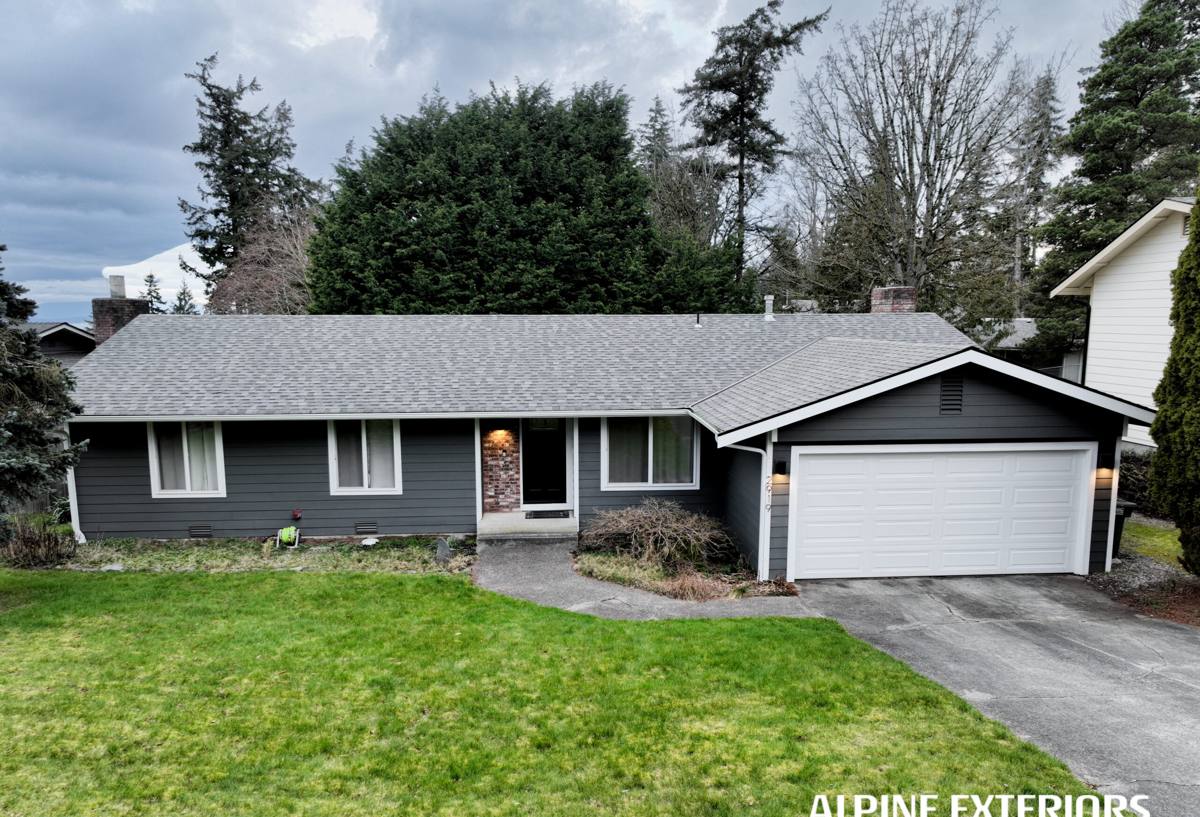
What Bellingham's Climate Does to Siding Over Time
Every siding material eventually shows wear, but the pattern of damage we see on Silver Beach homes tracks closely with the region's weather cycle:
- Moisture intrusion at butt joints, corner boards, and anywhere caulking has dried out or pulled away, especially after a wet Whatcom County winter.
- Moss and algae growth on north-facing and shaded walls, which holds moisture against the siding surface far longer than open, sun-exposed elevations.
- Paint and finish failure from repeated wet-dry cycling, which is harder on field-painted wood and composite products than on factory-finished siding.
- Warping, swelling, or delamination in wood-based and engineered wood products where moisture has been getting behind the surface for a while, often invisibly.
- Fastener and flashing corrosion from sustained exposure to salt-influenced coastal air, which can loosen boards even when the siding face still looks intact.
The driving rain that comes with Bellingham storms is a big part of the problem. It doesn't just wet a surface — it gets pushed horizontally and upward under laps, trim, and penetrations that were never built to shed water from that angle. A repair that only addresses what's visible from the ground misses the moisture path that caused the damage in the first place.
Why Moss Season Matters More Than People Expect
Moss isn't just an appearance issue. A moss mat traps water against siding and slows evaporation, so a wall section that would normally dry out between storms stays damp for days or weeks. Over a long moss season, that constant dampness accelerates rot in wood substrates and can degrade caulk and sealant faster than manufacturers' warranties assume. Any repair plan for a Silver Beach home should account for which elevations hold moss and treat those areas as higher priority, not identical to a sun-exposed south wall.
Signs Your Siding Needs Repair, Not Just a Wash
Homeowners often call about a stain or a soft spot, but the real question is whether the damage is surface-level or has already reached the sheathing and framing behind the siding. Some signs that point to a real repair need rather than routine cleaning:
- Boards that feel soft, spongy, or flex when pressed near the bottom edge or at seams
- Visible gaps opening up at corner boards, trim, or butt joints
- Peeling or bubbling paint concentrated in one area rather than spread evenly across the wall
- Dark staining that keeps returning shortly after cleaning
- Siding that has visibly cupped, bowed, or separated from the wall
- Interior signs — a musty smell, a soft spot on interior drywall, or a stain near a window that lines up with an exterior trouble spot
None of these automatically mean the whole wall needs to come off. But they do mean the area needs to be opened up and inspected properly rather than caulked over.
Repair or Replace: How We Make the Call
Not every damaged section needs full re-siding, and not every home is a good candidate for a patch repair. We look at the extent of the damage, how it's distributed across the house, and what's underneath before recommending either path.
| Factor | Favors Repair | Favors Replacement |
|---|---|---|
| Extent of damage | Isolated to one or two wall sections | Spread across multiple elevations |
| Sheathing condition | Solid, dry framing behind the siding | Soft or rotted sheathing found on inspection |
| Siding age | Mid-life, otherwise sound material | Near or past its expected service life |
| Original material | Still available or reasonably matched | Discontinued, faded beyond match, or a material we don't stand behind long-term |
| Underlying cause | A single identifiable failure point (flashing, caulk, one bad board) | A systemic issue — no water-resistive barrier, chronic moisture intrusion, widespread moss damage |
When damage is contained and the sheathing underneath is sound, a targeted repair is the honest recommendation — there's no reason to re-side a whole home over one bad corner. When we find the underlying framing has been compromised, or the damage pattern shows the same failure repeating across the house, patching it would just mean doing the same repair again in a year or two.
What a Correct Siding Repair Actually Involves
A repair that holds up through another Whatcom County winter involves more steps than swapping a damaged board for a new one. Our process on a typical repair includes:
- Removing siding beyond the visibly damaged area to see how far moisture has actually traveled, rather than stopping at the first dry-looking board.
- Inspecting the sheathing and water-resistive barrier underneath for rot, delamination, or gaps that let water behind the cladding in the first place.
- Repairing or replacing damaged sheathing and framing before any new siding goes back on — covering rotted wood with new siding just hides the problem.
- Correcting the flashing and drainage detail that allowed water in, whether that's at a window head, a butt joint, or a penetration for a vent or fixture.
- Installing new siding material to match, with proper fastening, clearances, and sealant at the points that actually need it — not everywhere, since over-caulking can trap moisture just as badly as leaving a gap.
- Priming, painting, or finishing the repair to match the surrounding wall so the fix doesn't stand out as a patch.
Skipping the inspection step is the single most common shortcut that leads to a repeat call a year later. If the water path isn't found and corrected, a new board in the same spot will fail again on the same timeline.
How We Work in Silver Beach
Because we work regularly in this part of Bellingham, we already have a working sense of which elevations tend to hold moss the longest, which lot layouts get the most wind-driven rain exposure, and how local homes were typically built and sided. That local pattern recognition speeds up diagnosis — we're not guessing at what's common in this neighborhood, we're confirming it.
Our repair visits generally follow the same structure:
- An on-site inspection of the damaged area and a check of the rest of the home's siding for related issues
- A plain explanation of what we found, including whether it's a contained repair or something bigger
- A written estimate before any work starts, with the scope clearly defined
- Repair work scheduled around Bellingham's weather windows, since siding work needs a reasonably dry stretch to do correctly
- A final walkthrough so you can see and approve the finished repair before we consider the job done
Repairing Around Different Siding Materials
Silver Beach homes were sided with a mix of materials over the decades — cedar, primed spruce, vinyl, LP SmartSide, and in some cases fiber cement. When we repair a section of existing siding, we work with what's already on the house; a repair isn't the moment to force a material change on a homeowner who isn't planning a full re-side.
That said, part of an honest repair conversation is telling you what we're seeing in that material. Cedar and primed wood siding are the products most likely to show the rot and paint-failure patterns described above, because they depend heavily on maintenance and a sound paint film to keep moisture out. Vinyl doesn't rot, but it cracks and warps with age and temperature swings, and damaged sections are often hard to color-match once a run is discontinued. LP SmartSide is an engineered wood product, and like other wood-based sidings, its long-term performance depends on edges, cuts, and joints staying properly sealed — a detail that's easy to compromise during a partial repair if the original installation wasn't done to spec.
When a homeowner is dealing with damage spread across enough of the house that a full re-side makes more sense than another round of patching, we install James Hardie fiber cement exclusively. It's a non-combustible material with a factory-applied ColorPlus finish, engineered climate-specific product lines built for exactly the wet, moss-prone conditions common around Bellingham Bay and Whatcom County, and a strong transferable warranty. We don't install vinyl, LP SmartSide, Cemplank, Allura, or unfinished wood siding — not because those products can't be installed well, but because we've standardized on the one system we're willing to stand behind for the long term in this climate.
What Drives the Cost of a Siding Repair
Repair costs vary enough between homes that we won't quote a number without seeing the damage, but the main cost drivers are consistent:
| Cost Factor | Why It Matters |
|---|---|
| Size of the affected area | More linear feet of damaged siding means more material, labor, and finish work |
| Sheathing and framing condition | Rotted structural material behind the siding adds carpentry work beyond the siding itself |
| Material match | Matching an existing product (color, profile, exposure) can take longer than fresh installation |
| Accessibility | Second-story sections, tight side yards, or areas near landscaping add setup time |
| Underlying cause | A repair that also requires new flashing or drainage correction takes longer than a straight board swap |
The only way to get an accurate number is a physical inspection — quotes based on a phone description alone tend to miss the sheathing condition, which is usually the biggest swing factor in the final price.
A Quick Self-Check Before You Call
If you're not sure whether your siding needs professional attention yet, walk the exterior and check for these:
- Soft spots when you press firmly on lower wall sections, especially near grade
- Gaps at corner boards, window trim, or siding seams you can see daylight or a gap through
- Moss or dark green-black staining that covers more than a small patch on any wall
- Paint that's peeling in sheets rather than just chalking or fading
- Any interior staining, soft drywall, or musty odor on an exterior wall
- Siding that has visibly separated, bowed, or pulled away from the wall surface
Finding one or two of these doesn't necessarily mean extensive damage, but it's worth having it looked at before another wet season adds to the problem.
Why Local Experience Matters for This Kind of Work
Siding repair is diagnostic work as much as it's carpentry. A crew that hasn't worked much in Bellingham's coastal-influenced climate can misjudge how far moisture has traveled behind a wall, or underestimate how much a shaded, moss-prone elevation differs from a sun-exposed one on the same house. Working regularly in Whatcom County means we've seen how these houses age in this specific climate — the salt air, the driving rain, the long moss season — and that shapes how thoroughly we inspect before we ever propose a fix.
If you're seeing signs of trouble on your siding, or you just want a second opinion on a repair another contractor proposed, we're happy to take a look. We offer free, no-pressure estimates for Silver Beach homeowners — you can request one using the form below.