 Bellingham
 Window Installation for Ferndale Homes
Ferndale sits close to Bellingham Bay and the open water of the Salish Sea, which means homes here take on a version of Whatcom County's marine climate that's a little more direct than towns further inland. Salt-tinged air moves through the area steadily, rain arrives sideways as often as it falls straight down, and a long moss and mildew season keeps exterior surfaces damp for a large part of the year. Windows sit right at the front line of all of it. A window opening is the single most common place in a wall assembly for water to find its way in, and the difference between a window that lasts decades and one that fails early usually comes down to installation detail, not just the product itself.
We install windows across Ferndale and the surrounding Whatcom County area, and we treat every job as a full opening, not just a box swap. That distinction matters more here than it does in a drier climate, because a window that's simply set into an old, uninspected opening can look fine for a year or two while water is already working its way behind the frame.
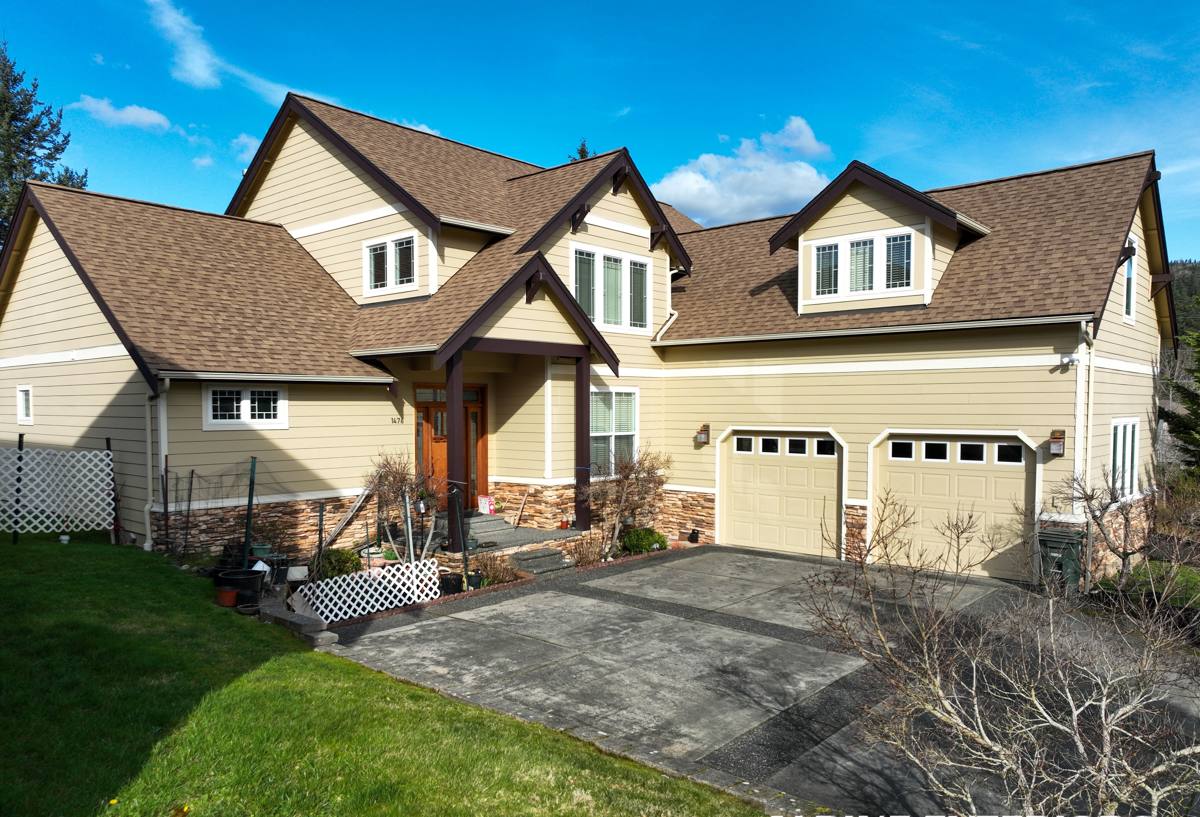
What Ferndale's Climate Does to Windows and Frames
Salt Air and Corrosion
Proximity to the bay means a steady low-level exposure to salt-laden moisture in the air, not just on stormy days. Over years, that exposure is hard on lower-grade hardware, fasteners, and finishes, corroding hinges, cranks, and locks faster than the same components would wear in an inland climate. It's a slow, quiet kind of wear that's easy to miss until a window stops operating smoothly.
Wind-Driven Rain
Like most of coastal Whatcom County, Ferndale gets rain pushed sideways by wind off the water rather than falling straight down. A window and flashing detail that would hold up fine somewhere calmer and drier can still leak here specifically because the wind is driving water into the top corners of the frame, the sill, and the joint between the window and the surrounding wall from an angle a simple, straight-down rainfall assumption doesn't account for.
Moss, Mildew, and Sill Rot
Mild temperatures and near-constant dampness support moss and mildew growth on shaded and north-facing walls for much of the year. Around windows, that moisture tends to collect at the sill and lower corners, the parts of the frame that stay wet longest. If those areas aren't properly flashed and sealed, moisture works into the wood or composite beneath the window and rot can set in long before it's visible from inside the house.
What a Correct Window Installation Actually Involves
Buying a good window is only part of the job. How it's set into the wall determines whether it actually performs the way it's rated to.
Full-Frame vs. Insert (Pocket) Replacement
An insert, or pocket, replacement keeps the existing window frame in place and fits a new unit inside it. It's faster and less invasive, and it can be the right call when the existing frame is square, dry, and sound. A full-frame replacement removes the old window down to the rough opening, which lets us actually inspect the sheathing, framing, and existing flashing for hidden moisture damage before anything new goes in. In a climate with this much sustained rain, we lean toward full-frame replacement whenever there's any sign of past water intrusion, because an insert installed over a compromised opening just seals the problem back up instead of fixing it.
Flashing and Sill Pan Integration
The single most important part of a correct installation, more than the window brand, is how the opening is flashed. That means a sloped sill pan that directs any water that does get past the window back out instead of letting it pool, proper head flashing above the window that overlaps correctly with the house wrap, and side flashing that's integrated into the wall's drainage plane as one continuous system rather than caulked on as an afterthought.
Sealants, Insulation, and Fastening
Around the frame, gaps need to be insulated without overpacking, which can bow the frame and affect how the window operates. Sealants have to be compatible with both the window material and the surrounding wall material, and fastening has to hit structural framing at the manufacturer's specified pattern to keep the window performing and the warranty intact. Skipping any one of these steps is a common reason a good window underperforms or fails early.
Window Material and Glazing Options
| Option | How It Performs in Ferndale's Climate | Trade-Off |
|---|---|---|
| Vinyl | Won't rot or corrode from salt air; consistent performance with low maintenance | Frame color and finish options are more limited than wood or fiberglass |
| Fiberglass | Very stable in temperature and moisture swings, holds paint well, strong against wind-driven rain when properly installed | Higher material cost than vinyl |
| Aluminum-clad wood | Attractive interior wood finish with a weather-resistant exterior clad surface | Requires careful sealing at the clad-to-wood transition; more sensitive to installation quality |
| Double-pane, Low-E glazing | Solid baseline energy performance and condensation resistance for this region | Less thermal performance than triple-pane in the coldest snaps |
| Triple-pane glazing | Better insulation and sound dampening, worthwhile on north or water-facing exposures | Added cost and weight; not always necessary for every wall orientation |
We don't push every homeowner toward the most expensive option. We talk through which combination actually fits the specific opening, its exposure, and your budget.
Our Installation Process
- On-site assessment: We look at each window opening individually, not just the house as a whole, since exposure and condition can vary wall to wall.
- Product selection: We walk through material, glazing, and performance options based on that specific opening's sun and weather exposure.
- Removal and inspection: On full-frame jobs, we open the wall enough to check sheathing and framing for hidden moisture damage before anything new goes in.
- Flashing and sill pan installation: This is done as an integrated system with the house wrap, not as a separate afterthought step.
- Window setting and fastening: Shimmed level and square, fastened to manufacturer spec, and checked for smooth operation before final sealing.
- Insulation and sealing: Gaps are filled without overpacking, and sealants are matched to the surrounding materials.
- Final walkthrough: We check operation, look, and seal with you before calling the job done.
Signs Your Ferndale Home Needs New Windows
- Fogging or condensation between the panes, which means the seal has failed and the insulating gas has escaped
- Difficulty opening, closing, or locking a window, often from corroded hardware or a frame that's swollen from moisture
- Soft or discolored wood or trim at the sill or lower corners of the frame
- Visible drafts or a noticeable temperature difference near the window on windy days
- Rising heating bills without another clear explanation
- Peeling paint or finish failure concentrated around the window frame rather than the wall in general
Cost Factors for Window Installation in Ferndale
| Factor | What It Affects | Why It Matters Here |
|---|---|---|
| Full-frame vs. insert replacement | Labor scope and access to hidden framing | Full-frame work exposes moisture damage that's common behind aging openings in this climate |
| Window count and size mix | Total material and labor | Older Ferndale homes often mix original window sizes, which can limit standard-size savings |
| Frame material and glazing package | Upfront material cost | Higher-performing glazing pays off most on water-facing or north walls with the heaviest exposure |
| Existing wall condition | Repair costs found during removal | Wind-driven rain over the years can hide sheathing or framing damage until the opening is actually opened up |
| Trim and exterior finish work | Finish cost and weather-tightness | Trim and flashing details need to tie back into the surrounding siding correctly to stay sealed |
We walk the property and look at each opening before quoting, because window pricing that's estimated sight-unseen tends to miss exactly the kind of hidden damage that's common in a climate this wet.
Windows, Siding, and the Rest of Your Exterior
Window problems rarely stay isolated. A window that was flashed incorrectly years ago can show up as siding damage, trim rot, or a soft spot on an interior wall well before the window itself looks obviously bad. Because we also handle siding, roofing, and decks, we can look at a Ferndale property as one connected exterior system when we're there for windows, and flag a related issue instead of installing a new window into a wall assembly that's already compromised somewhere else.
Why a Local Ferndale Crew Matters
A crew that works this part of Whatcom County regularly sees how salt air, wind-driven rain, and moss actually behave on real window installations over time, not just how a product performs on a spec sheet. That translates into practical decisions on install day: which orientations need extra flashing attention, where sill pans matter most, and which details are worth the additional time so you're not dealing with a callback in a few winters. Ferndale's mix of water-facing and more sheltered inland properties isn't uniform, and a crew that's actually worked both accounts for that instead of installing every window the same way regardless of exposure.
If your Ferndale home needs new windows, a repair, or just a straight answer about whether an existing window is worth saving, we're glad to take a look. Reach out using the form below to schedule a free, no-pressure estimate.